


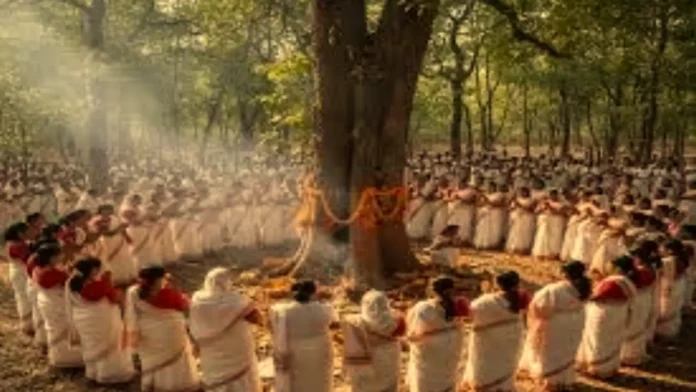
India is home to many indigenous traditions that reflect a deep respect for nature. Among these traditions, the Sarhul Festival stands out as one of the most meaningful celebrations of tribal communities in eastern India.
Sarhul marks the arrival of spring and the beginning of a new agricultural season. Tribal communities celebrate this festival when Sal trees begin to bloom with fresh flowers, a natural sign that the earth is entering a new cycle of life.
More importantly, Sarhul reflects a worldview where forests, land, and natural forces are treated as sacred. The festival therefore becomes both a spiritual event and a cultural celebration.
Meaning of the Sarhul Festival
The word Sarhul carries symbolic meaning rooted in tribal traditions. The term is derived from two words where “Sar” refers to the Sal tree and “Hul” means worship or joy.
In simple terms, Sarhul represents the worship of nature through the sacred Sal tree. For tribal communities, trees are not just part of the environment. They are living entities that support life and ensure the balance of nature.
The blooming of Sal flowers during spring signals renewal, fertility, and prosperity. As a result, communities celebrate this moment with rituals that express gratitude toward nature.
Historical Background of Sarhul
Sarhul has its roots in the ancient traditions of tribal societies living in the Chotanagpur plateau region. For generations, these communities depended on forests and agriculture for survival.
Because their lives were closely linked with seasonal changes, festivals naturally evolved around the cycles of nature. Sarhul became a way to celebrate the arrival of spring and prepare for the upcoming farming season.
Over time, the festival gained deep cultural importance among several tribal communities such as the Munda, Oraon, and Ho tribes. Even today, Sarhul remains one of the most respected festivals in tribal society.
Sarhul Festival 2026 Date
In 2026, Sarhul is expected to be celebrated on Saturday, 21 March 2026. However, the date may vary from village to village.
This variation occurs because the festival does not follow a fixed national calendar. Instead, local tribal priests determine the celebration date based on the blooming of Sal flowers and traditional community calendars.
Therefore, some regions may celebrate Sarhul a few days earlier or later depending on local traditions and natural signs.
When Sarhul Is Celebrated
Sarhul is generally celebrated during the month of Chaitra, which falls between March and April in the Gregorian calendar. The festival begins when villagers observe the blooming of Sal flowers in nearby forests.
The celebrations often continue for three days. Each day involves rituals, community gatherings, music, and traditional dance. The entire village participates, which strengthens the social bonds within the community.
Spiritual Beliefs Associated with Sarhul
Sarhul reflects the spiritual philosophy of tribal communities. They believe that nature holds powerful forces that guide and protect human life.
The festival symbolically celebrates the relationship between the Sun and the Earth, which represents fertility and the continuation of life. This belief highlights an important principle of tribal culture: humans must live in harmony with nature.
Through prayers and offerings, people seek blessings for good rainfall, fertile land, and the well-being of the entire community.
Sacred Grove: The Sarna
The main rituals of Sarhul take place in a sacred grove known as the Sarna. This grove usually lies near the village and contains several Sal trees.
The Sarna serves as a spiritual center where villagers gather to perform important ceremonies throughout the year. Tribal communities believe that protective spirits and village deities reside in this sacred space.
During Sarhul, villagers visit the Sarna to offer prayers for prosperity, good harvest, and protection from natural calamities.
Key Rituals of the Sarhul Festival
Worship of the Sal Tree
The Sal tree plays a central role in Sarhul celebrations. Its flowers symbolize purity and renewal. Villagers collect these flowers and offer them during rituals to honor the natural forces that sustain life.
Role of the Village Priest
The religious ceremony is conducted by the village priest, known as the Pahan. Before performing the rituals, the priest observes fasting and prepares for the sacred ceremony.
He leads the worship at the Sarna grove and offers flowers, grains, and traditional drinks to the village deities. These rituals seek blessings for prosperity, peace, and a successful agricultural season.
Ritual Offerings
During the ceremony, villagers present various offerings such as rice, fruits, and traditional drinks. These offerings express gratitude to nature and to the spiritual forces believed to protect the village.
Agricultural Prediction Ritual
One interesting custom involves observing water kept in pots within the sacred grove. The priest studies the water level the next day and predicts whether the coming year will bring sufficient rainfall or drought.
Dance, Music and Community Celebration
Once the rituals conclude, the festival turns into a lively cultural celebration. Villagers gather for traditional dances and music performances.
Men and women dance in groups while holding Sal flowers. The rhythmic beats of traditional instruments such as Mandar drums and Nagara create a festive atmosphere across the village.
Food also plays an important role in the celebration. Families prepare traditional dishes and share them with neighbors. A locally brewed rice drink called Handia is commonly served during the festivities.
These gatherings strengthen community ties and create a sense of unity among villagers.
Sarhul Celebrations in Cities
Although Sarhul began as a village festival, it has gradually become an important public celebration in urban areas as well.
In cities such as Ranchi, large processions take place during the festival. Tribal communities walk through the streets wearing traditional attire and carrying Sal flowers.
These processions include cultural performances, music, and dance. They also serve as a powerful reminder of tribal identity and heritage.
Cultural and Environmental Importance
Sarhul carries an important message about the relationship between humans and nature. The festival teaches that forests and natural ecosystems must be respected and protected.
By worshipping trees and natural forces, tribal communities acknowledge the role of nature in sustaining life. This traditional wisdom reflects a sustainable approach to living with the environment.
In today’s world, where environmental challenges are increasing, the philosophy behind Sarhul remains highly relevant.
Sarhul is more than a seasonal festival. It represents the cultural identity, spiritual beliefs, and ecological wisdom of tribal communities.
Through rituals, dances, and communal celebrations, the festival marks the arrival of spring and the renewal of life. At the same time, it reminds people of the deep connection between humans and the natural world.
Even after centuries, Sarhul continues to preserve the traditions of indigenous communities while spreading a timeless message — nature must be respected, protected, and celebrated.

