


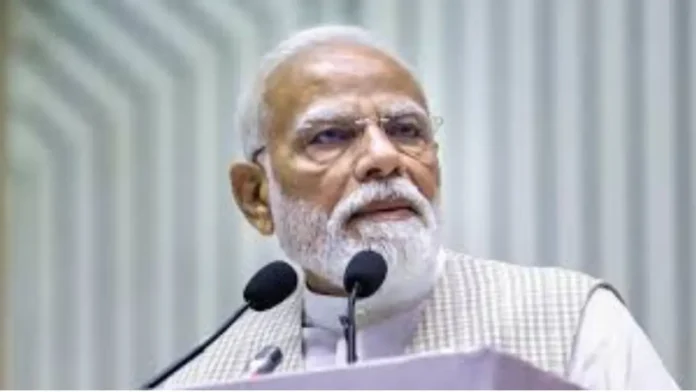
On April 19, 2026, two sharply contrasting narratives captured national attention. On one hand, reports of Iranian gunboats targeting Indian-linked vessels in the Strait of Hormuz raised serious geopolitical concerns. On the other hand, a seemingly simple and human moment involving Narendra Modi stopping for a jhalmuri snack in West Bengal went viral across social media.
This juxtaposition highlights the dual nature of modern leadership—navigating complex global crises while maintaining relatable public engagement at home.
The Viral Jhalmuri Moment in Jhargram
During a high-energy election campaign in Jhargram, PM Modi made an unexpected stop after addressing a rally. Walking up to a local vendor, he said, “Bhai, hume apna jhalmuri khilao.”
As the snack was being prepared, he engaged in a light-hearted exchange:
- Asked about the price: “Kitne ka hota hai jhalmuri?”
- Responded humorously when asked about onions:
“Haan, pyaaz khaate hain. Dimag nahi khaate bas.”
The moment, captured on video, quickly spread online, triggering a mix of admiration, skepticism, and political debate.
Political Context: Bengal’s High-Stakes Battle
The incident occurred amid an intense electoral contest in West Bengal, where the Bharatiya Janata Party (BJP) is challenging the long-standing leadership of Mamata Banerjee.
PM Modi addressed multiple rallies across:
- Bankura
- Purulia
- Jhargram
- Medinipur
These appearances are part of a broader strategy to:
- Strengthen grassroots outreach
- Build emotional resonance with voters
- Position the leadership as accessible and connected
Street Politics and Symbolism
The “jhalmuri break” is not just a casual act—it carries layered political symbolism.
1. Cultural Connection
Jhalmuri is not just a snack; it is a staple of Bengali street culture. By engaging with it, the Prime Minister aligns himself with:
- Local identity
- Everyday life
- Regional traditions
2. Optics of Accessibility
Such a gesture project:
- Simplicity
- Approachability
- Human connection
In political communication, these visual cues often carry more weight than speeches.
3. Designed Spontaneity
While the moment appears unplanned, security experts note:
- The Prime Minister is protected by elite security layers
- Any public interaction is carefully managed
Thus, the event represents a controlled yet natural-looking interaction, crafted for maximum public impact.
Public Reaction: Divided Yet Engaged
The viral clip sparked diverse reactions:
- Supporters praised the gesture as authentic and relatable
- Critics questioned whether the act was staged for the cameras
- Neutral viewers engaged humorously, focusing on the witty onion remark
This spectrum of responses reflects the polarized yet highly engaged nature of Indian political discourse today.
Media, Virality, and Perception
The rapid spread of the jhalmuri video highlights the role of digital media in shaping narratives:
- Short clips amplify emotional reactions
- Context is often secondary to visual impact
- Political messaging becomes instant and widespread
In contrast, complex issues like Hormuz tensions receive:
- Slower engagement
- More analytical coverage
- Less viral traction
Conclusion
PM Modi’s jhalmuri break in Jhargram is more than a viral moment—it is a case study in modern political communication. It demonstrates how simple, culturally rooted gestures can create powerful narratives.
At the same time, the backdrop of rising tensions in the Strait of Hormuz reminds us that leadership operates on multiple levels. While public engagement builds trust at home, strategic decision-making remains critical on the global stage.
Together, these parallel developments capture the essence of contemporary governance—where optics, emotion, and geopolitics intersect in real time.

