


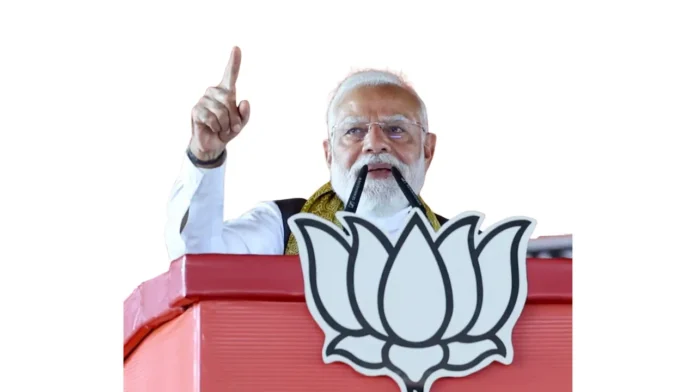
A short video circulating on social media has taken the internet by storm. In the clip, Narendra Modi is seen stepping out of his convoy in Jhargram and briefly stopping at a local shop, reportedly to grab a quick snack.
The moment has left many people surprised—even calling it “unthinkable”—given the Prime Minister’s high-security profile. But beyond the viral excitement, the incident deserves a closer and more analytical look.
What the Viral Video Shows
The video, widely shared on X (formerly Twitter), captures a rare and visually striking scene:
- The Prime Minister halting his convoy
- Stepping out in a relatively informal setting
- Interacting with a local shop
At face value, the act appears spontaneous and unscripted. That perception is exactly what has fueled its virality.
Despite appearances, such moments are never entirely unplanned.
The Prime Minister is protected by the Special Protection Group (SPG), which operates under strict protocols. These include:
- Advance route sanitization
- Real-time surveillance
- Controlled public access
Even if a stop appears sudden, security teams are trained to:
- Quickly secure the environment
- Assess potential risks within seconds
- Maintain a protective perimeter
In practical terms, this means the Jhargram stop was almost certainly a controlled and secured interaction, even if it looked casual.
Why the Moment Feels So Extraordinary
1. Breaking the Usual Image
Top political leaders are usually seen in:
- Formal events
- Highly managed public appearances
- Restricted-access environments
A roadside stop disrupts that image, creating a sense of closeness and relatability.
2. Cultural Connect
In India, food and local shops carry strong emotional value. A leader engaging in such a setting signals:
- Simplicity
- Ground-level connection
- Familiarity with everyday life
3. Power of Social Media
The viral clip gained traction quickly because:
- It is short and visually compelling
- It captures an unexpected moment
- It invites emotional reactions
Social media often amplifies such moments without full context, focusing on surprise rather than structure.
Strategic Optics in Modern Politics
Today’s political communication is not just about speeches and policies. It also involves:
- Visual storytelling
- Symbolic gestures
- Carefully crafted public moments
The Jhargram incident fits into this framework.
Designed to Feel Natural
Such interactions are often:
- Planned within secure parameters
- Timed for maximum visibility
- Executed to appear unscripted
This blend of planning and spontaneity creates a powerful narrative.
Public Reaction: Why People Are Shocked
The strong public response can be explained by:
- Unexpectedness: People do not expect a Prime Minister to behave casually in public spaces
- Visual authenticity: Video creates a sense of real-time experience
- Rarity: Such moments are infrequent, making them more impactful
The combination of these factors makes the event feel extraordinary.
The Bigger Picture
This incident is more than just a brief stop for snacks. It reflects a broader trend in leadership communication:
- Leaders projecting accessibility
- Creating emotionally resonant moments
- Using digital platforms to amplify impact
It also shows how perception is shaped:
- What looks spontaneous may be structured
- What feels casual may be strategic
Conclusion
The viral Jhargram moment stands at the intersection of security, symbolism, and storytelling. While it appears to be a sudden and unplanned act, it is best understood as a carefully managed interaction designed to connect with the public.
That is precisely why it has captured attention. It is not just about what happened—but how it was seen, shared, and interpreted.
In today’s digital age, such moments are not accidental. They are crafted experiences that feel real—and that is what makes them powerful.

