


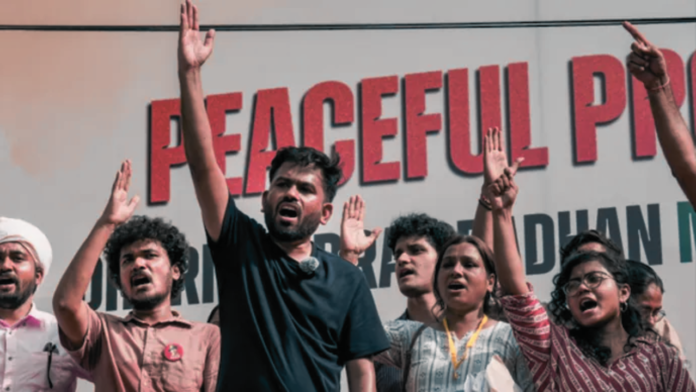
New Delhi, June 21: The protest led by the Cockroach Janta Party (CJP) continued for a second consecutive day at Jantar Mantar in New Delhi, drawing attention from students, youth groups, and social media users across the country. The movement, led by founder Abhijeet Dipke, has emerged as a vocal platform demanding accountability in India’s education system and greater transparency in the conduct of competitive examinations.
Protest Gains Momentum
As the demonstration entered its second day, protesters remained firm on their demands, with organizers claiming that public support had been steadily increasing. Participants gathered at Jantar Mantar carrying placards, banners, and symbolic protest materials to highlight concerns over examination-related controversies and broader issues affecting students.
Abhijeet Dipke appealed to citizens from all walks of life to join the movement, emphasizing that the protest is not limited to a single examination or group of students. According to organizers, the campaign seeks to address systemic issues that impact the future of millions of young Indians.
Focus on Education and Accountability
The primary focus of the protest revolves around concerns regarding examination management, transparency, and accountability within the education sector. Protesters argue that recurring controversies surrounding competitive examinations have created uncertainty among students and parents.
Many participants believe that stronger safeguards, improved oversight, and greater accountability are necessary to restore confidence in the examination system. Student groups attending the protest expressed concerns about the stress and anxiety caused by repeated disruptions in high-stakes entrance tests.
Symbolic Demonstrations Draw Attention
One of the distinctive features of the protest has been the use of creative and symbolic demonstrations. Participants used everyday household items, including plates and spoons, to amplify their message and attract public attention.
The movement has also leveraged social media platforms to spread awareness, with videos and photographs from the protest circulating widely online. Supporters claim that digital engagement has helped the campaign reach audiences far beyond the protest site.
Challenges Faced by Protesters
Organizers alleged that protesters encountered logistical difficulties during the demonstration, including issues related to basic facilities at the protest venue. Despite these challenges, participants continued their sit-in and vowed to maintain pressure until their concerns are addressed.
The organizers stated that the movement remains peaceful and democratic, focusing on raising awareness about issues affecting students and young professionals.
Growing Appeal Among Youth
The Cockroach Janta Party began as a youth-driven initiative and has rapidly gained visibility through its unconventional style of activism. By combining satire, public engagement, and social media outreach, the group has attracted followers who believe traditional methods of protest often fail to capture public attention.
Supporters argue that the movement represents growing frustration among young people over employment opportunities, educational challenges, and governance-related concerns.
What Happens Next?
CJP leaders have indicated that the protests will continue in the coming days and could expand to additional cities if their demands remain unmet. Organizers are also planning outreach campaigns to encourage greater participation from students, farmers, and civil society groups.
Political observers note that while the movement is still relatively new, its ability to generate discussion on social media and attract media attention has made it a notable development in India’s evolving protest landscape.
As the demonstration continues, all eyes remain on how authorities respond and whether the movement can translate online support into sustained public participation on the ground.
The coming days are expected to determine the future direction of the protest and its impact on the broader debate surrounding education reforms and student welfare in India.

