


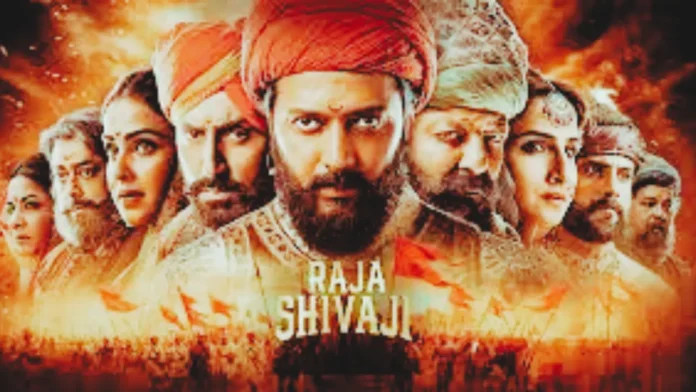
In an era where star salaries dominate headlines and big-budget films often collapse under their own ambition, Raja Shivaji has emerged as something rare — a film driven by emotion, faith, and collective purpose.
Directed by Riteish Deshmukh, the historical epic has not only become a major box office success but also one of the most discussed cultural events of 2026.
What makes the film extraordinary is not just its scale. It is the story behind its making.
Several of India’s biggest actors — including Salman Khan, Abhishek Bachchan, Vidya Balan, Boman Irani, and Fardeen Khan — reportedly worked on the film without charging any fees.
Even Riteish and Genelia Deshmukh refused payment for acting, directing, and producing the project.
That decision changed the emotional energy of the film completely.
Raja Shivaji does not feel like a contractual studio product. It feels personal. Every frame carries the weight of devotion toward Chhatrapati Shivaji Maharaj and the legacy he represents in Indian history.
Why Raja Shivaji Became More Than Just a Film
Historical cinema in India often struggles with balance.
Some films become visually grand but emotionally hollow. Others become politically loud while neglecting storytelling. Raja Shivaji attempts something more difficult — reverence without losing dramatic momentum.
The film traces Shivaji Maharaj’s journey from his formative years in Pune to the creation of the Maratha Empire and his eventual coronation as Chhatrapati.
Instead of presenting him merely as a warrior king, the film focuses heavily on strategy, emotional resilience, leadership, and spiritual conviction.
That choice gives the story depth.
Rather than rushing through historical milestones, Riteish structures the narrative in chapters. Each chapter explores a different stage of Shivaji Maharaj’s transformation — son, leader, military strategist, rebel, and empire builder.
The result feels expansive, though not always tightly controlled.
Riteish Deshmukh’s Most Ambitious Career Move
For years, Riteish Deshmukh remained known primarily for comedy, mainstream entertainers, and supporting roles in Hindi cinema.
Raja Shivaji changes that perception completely.
As director, producer, and lead actor, he takes an enormous creative risk. Historical epics demand precision. Audiences notice weak writing, poor visual effects, or emotional inconsistency immediately.
Yet Riteish approaches the material with sincerity rather than arrogance.
His version of Shivaji Maharaj avoids exaggerated heroism. Instead, he plays the character with restraint and quiet authority. That controlled performance becomes one of the film’s strongest elements.
The emotional scenes especially work because Riteish avoids theatrical excess. He lets silence and expression carry meaning.
For a directorial debut at this scale, the achievement is undeniably impressive.
Why Bollywood Stars Agreed to Work for Free
The biggest talking point surrounding Raja Shivaji remains the decision by several major stars to waive their fees entirely.
In modern Indian cinema, where leading actors often charge massive sums, such a move feels almost unbelievable.
However, the emotional significance of Shivaji Maharaj appears to have changed the equation.
When Riteish approached actors with the story, many reportedly agreed immediately. The project was not positioned as a commercial opportunity first. It was presented as a cultural responsibility.
That distinction mattered.
According to industry discussions surrounding the film, several actors joined because they believed the story deserved scale and sincerity more than financial negotiation.
This collective participation also helped the film allocate more resources toward production design, costumes, battle staging, and music.
In many ways, Raja Shivaji became a collaborative tribute rather than a conventional business transaction.
Salman Khan’s Cameo Became a Theatre Moment
Among all supporting appearances, Salman Khan generated the loudest audience reaction.
He plays Jiva Mahala, the loyal warrior remembered for protecting Shivaji Maharaj during the confrontation with Sayyad Banda.
The role is brief. Yet it leaves enormous impact.
Reports suggest Salman completed his portion within just a few shooting days. Despite limited screen time, audiences across Maharashtra and beyond have treated the cameo like an event.
Videos from theatres showing cheering crowds, whistles, and applause quickly spread online after release.
The reason goes beyond star power.
Salman approaches the role with seriousness rather than fan-service theatrics. That restraint allows the moment to feel earned.
Abhishek Bachchan Delivers One of His Strongest Performances in Years
Abhishek Bachchan surprises audiences as Sambhaji.
His performance brings energy and unpredictability to the film’s second half. Several emotional and battlefield scenes gain momentum because of his presence.
Critics and viewers alike have described his portrayal as powerful and crowd-pleasing without becoming cartoonish.
This role also reminds audiences that Abhishek performs best when directors allow him emotional complexity rather than forcing him into formulaic heroism.
In Raja Shivaji, he finally receives that space again.
Sanjay Dutt’s Afzal Khan Adds Real Threat
Sanjay Dutt plays Afzal Khan with heavy physical presence and controlled menace.
The character could easily have become exaggerated. Instead, Dutt chooses a colder and more calculated interpretation.
That decision improves the tension dramatically.
The Pratapgad confrontation sequence therefore becomes one of the film’s most gripping sections.
Rather than relying entirely on spectacle, the scene succeeds because the emotional and psychological stakes feel genuine.
Genelia Deshmukh and Bhagyashree Bring Emotional Stability
Historical films often underwrite female characters. Raja Shivaji avoids that mistake partially through strong performances.
Genelia Deshmukh plays Sai Bai with emotional subtlety. She avoids dramatic excess and instead creates warmth through smaller gestures and reactions.
Meanwhile, Bhagyashree delivers one of the film’s most emotionally grounded performances as Jijabai.
Her scenes with young Shivaji provide the ideological backbone of the narrative.
The film repeatedly returns to Jijabai’s influence because it understands an important historical truth — Shivaji Maharaj’s leadership philosophy emerged significantly from her guidance and vision.
Music Becomes the Soul of the Film
If one department consistently elevates Raja Shivaji, it is the music.
Composer duo Ajay-Atul deliver a score filled with emotional intensity, grandeur, and regional authenticity.
The background music keeps long stretches of the film emotionally alive, especially during slower passages.
Several battle scenes gain impact primarily because of musical build-up rather than visual effects.
The title track has already become a major crowd favourite across Maharashtra.
Importantly, the soundtrack never feels disconnected from the film’s emotional tone. Instead, it deepens the sense of cultural identity throughout the narrative.
The Visual Grandeur — And Its Limitations
Cinematographer Santosh Sivan captures forts, mountains, and landscapes with scale and elegance.
The Sahyadri ranges look majestic throughout the film. Several wide shots genuinely communicate the harsh terrain and strategic brilliance behind Maratha warfare.
However, the film’s technical execution remains inconsistent.
Certain VFX-heavy battle scenes look unfinished. The colour grading occasionally becomes muddy, especially during darker combat sequences.
The editing also struggles under the film’s enormous runtime.
At nearly three and a half hours, Raja Shivaji sometimes feels determined to include every major historical moment instead of focusing on rhythm and pacing.
A tighter edit would likely have strengthened emotional impact further.
Why the Film Still Works Despite Its Flaws
Despite technical imperfections, Raja Shivaji succeeds because audiences sense honesty behind the filmmaking.
Modern viewers often forgive flaws when they feel genuine emotional investment from creators.
That emotional sincerity defines this film completely.
The actors do not appear disconnected from the material. The director does not seem interested only in scale or spectacle. Even the slower sections feel rooted in admiration for history rather than commercial calculation.
That sincerity creates audience connection.
The film therefore becomes larger than its weaknesses.
The Cultural Weight of Shivaji Maharaj in Cinema
Portraying Chhatrapati Shivaji Maharaj on screen carries enormous responsibility.
For millions, he is not simply a historical figure. He represents resistance, statecraft, courage, identity, and regional pride.
Because of that emotional significance, filmmakers often face intense scrutiny when adapting his life.
Raja Shivaji chooses reverence over revisionism.
Some critics argue that the film occasionally becomes too worshipful. Others believe that approach fits the emotional relationship many audiences already have with Shivaji Maharaj.
Regardless of perspective, the film clearly understands the cultural sensitivity surrounding its subject.
Box Office Performance and Marathi Cinema’s Big Moment
Released on Maharashtra Day, Raja Shivaji opened to strong occupancy across Maharashtra and major Indian cities.
Within days, the film crossed major box office milestones and entered the list of highest-grossing Marathi films ever made.
That success matters beyond numbers.
For years, Marathi cinema has produced critically respected films without always receiving nationwide commercial recognition. Raja Shivaji changes that conversation by proving regional-language historical epics can compete at a massive scale.
The film’s success also demonstrates the growing audience appetite for culturally rooted storytelling when supported by strong production values and emotional authenticity.
Final Verdict
Raja Shivaji is not a perfect film.
Its pacing drags occasionally. Some visual effects weaken major battle sequences. And the narrative sometimes prioritises reverence over dramatic sharpness.
Yet the film achieves something more important than perfection.
It creates emotional conviction.
Every major actor involved appears deeply committed to the story. That commitment reaches audiences immediately.
Riteish Deshmukh may have delivered a flawed epic, but he also delivered one of the most heartfelt historical films Indian cinema has seen in years.
And perhaps that explains why audiences continue filling theatres.
They are not just watching a historical drama.
They are witnessing a collective act of admiration brought to life on screen.

