


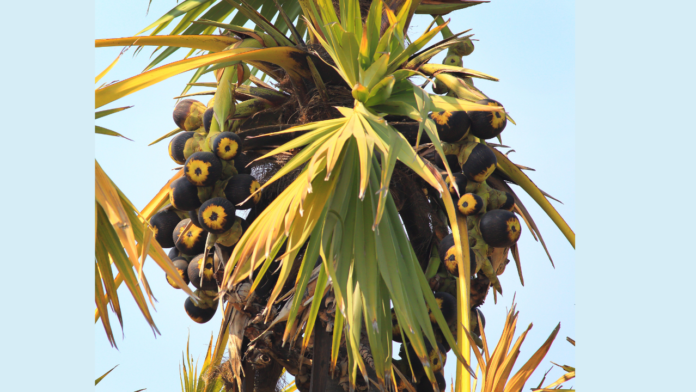
The heat in Puri is not ordinary heat. The sun bounces off the sand, off the walls, off everything. By midday, stepping outside feels like walking into a furnace. That is when you spot him — a vendor on the roadside, slicing open a large, dark palm fruit with a practiced flick of his blade. Inside, three translucent jelly-like kernels sit cushioned in the husk. He scoops them out and places them on a sal leaf. You take one, pop it in your mouth, and feel your whole body exhale.
That is Taadsaj. That is the fruit Odisha has known for centuries. And recently, even Puri’s own Member of Parliament could not resist it.
When the MP of Puri stopped for Taadsaj
This section is based on a tweet posted by Dr. Sambit Patra on his official X (Twitter) account @sambitswaraj.
In translation: “Today, amid the scorching heat in Puri, I savoured Taadsaj — the palm fruit! In summer, it is nature’s finest gift — cooling the body while keeping it naturally hydrated. In our Odia language, we call it Taadsaj. What do you call this fruit in your region and language? Tell me in the comments.”
That post sparked something. Replies poured in from across India — each one a different name, a different memory, a different state. It was a simple question from a politician eating a humble roadside fruit. And it reminded thousands of people about a fruit they had quietly grown up loving.
Sambit Patra is the sitting MP from the Puri Lok Sabha constituency and a surgeon by training. He knows the body well. And on that blazing Puri afternoon, he chose Taadsaj over anything else. That says something.
“In summer, it is nature’s finest gift — cooling the body while keeping it naturally hydrated.” — Dr. Sambit Patra, MP, Puri
So what exactly is Taadsaj?
Taadsaj is the fruit of the Palmyra palm — scientific name Borassus flabellifer. The tree grows up to 30 metres tall and can live for over 100 years. Its fruit has a tough black outer husk. Cut it open, and you find three seed sockets, each holding a pale, translucent jelly. The texture is similar to lychee. The flavour is mild, gently sweet, and faintly reminiscent of tender coconut water.
The most important number you need to know about this fruit: it is 90% water. So when you eat it, you are not just having a snack. You are essentially drinking nature’s own electrolyte drink — without any additives, preservatives, or sugar rush.
90% Water content — a natural hydrator
43 Calories per 100g — extremely light
One fruit, a dozen names
Sambit Patra asked the right question. Every state has grown up eating this fruit, and every state has its own name for it. The replies to his tweet proved exactly that — a flood of names, each one carrying a childhood memory.
Odisha Taadsaj
Hindi / Marathi Tadgola
Tamil Nungu
Telugu Taati Munjalu
Malayalam Tāḷ
Kannada Taati Hannu
Bengali Taal
English Ice Apple
In Tamil Nadu, the Palmyra palm holds the status of State Tree. Tamil culture calls it “karpaha veruksham” — the celestial tree — because every single part of it has a use. Rabindranath Tagore wrote an entire poem about it. And in Odisha, generations of coastal families have eaten Taadsaj as a summer ritual, not a trend.
Why your body craves it in summer
There is a reason people across India have been eating this fruit for thousands of years — and why a surgeon-turned-MP specifically calls it nature’s finest gift. It works. Here is what it actually does for your body.
Cools the body from within
Ayurveda classifies Taadsaj as a “sheetal aahar” — a cooling food. It actively lowers internal body heat, soothes acidity, and protects against heatstroke. No synthetic coolant comes close.
Natural hydration and electrolyte replenishment
With 90% water content, it replenishes fluids and electrolytes lost through sweat. Unlike sugary drinks, it hydrates without the crash that follows.
Good for the heart
The potassium in Taadsaj helps regulate blood pressure. Its antioxidants reduce oxidative stress — one of the key triggers of heart disease.
Safe for diabetics
It has a low glycemic index. So even though it tastes sweet, it does not cause sudden blood sugar spikes. You can enjoy it in moderation without worry.
Skin and hair benefits
Vitamin C and antioxidants boost collagen production — keeping skin firm and youthful. Hair follicles grow stronger, too. It is the most humble anti-ageing treatment you will find.
Weight-friendly and filling
Just 43 calories. Zero fat. High water content. It keeps you full longer and reduces the urge to snack unnecessarily — all without a strict diet plan.
Soothes prickly heat and skin irritation
The jelly applied directly to the skin relieves prickly heat, redness, and inflammation caused by intense summer heat. It is gentle enough for children too.
Eating Taadsaj in Puri — what it actually feels like
Puri draws millions of pilgrims and tourists every year. By May, the beach town simmers. Vendors line the streets with baskets full of Taadsaj, slicing and selling all morning. You stop. You watch the vendor’s knife work — confident, clean cuts. The kernel slides out intact.
You eat it standing at the roadside. No cutlery. No packaging. No receipt. Just the fruit, a sal leaf, and immediate relief. Sambit Patra did exactly this — not in an air-conditioned lounge, not at a fancy restaurant. At a street stall, in the middle of Puri’s blazing summer, like every ordinary person visiting the city.
The tree that gives everything
Taadsaj is just one gift from the Palmyra palm. The tree itself is extraordinary. Its leaves make roofing, baskets, and hand fans. Its timber is used in construction. Its roots appear in Ayurvedic medicines. And from its trunk, a single tree can yield up to 1,20,000 litres of sap over its lifetime — consumed fresh as a sweet drink called neera, or fermented into toddy.
That is why Tamil culture calls it the celestial tree. Nothing goes to waste. Not a leaf, not a root, not a drop of sap.
Before you eat Taadsaj — a few tips
- Always eat it freshly cut — the sweeter and juicier, the fresher it is
- Two to three kernels at a time is enough — too much can feel heavy on the stomach
- Do not drink cold water immediately after — it can disturb the body’s balance
- Children can safely eat it — it is completely natural with no harmful compounds
- Buy from vendors who cut in front of you — freshness matters with this fruit

? Discover its health benefits, regional names across India, Ayurvedic significance, and why it is the ultimate natural summer cooler.)