


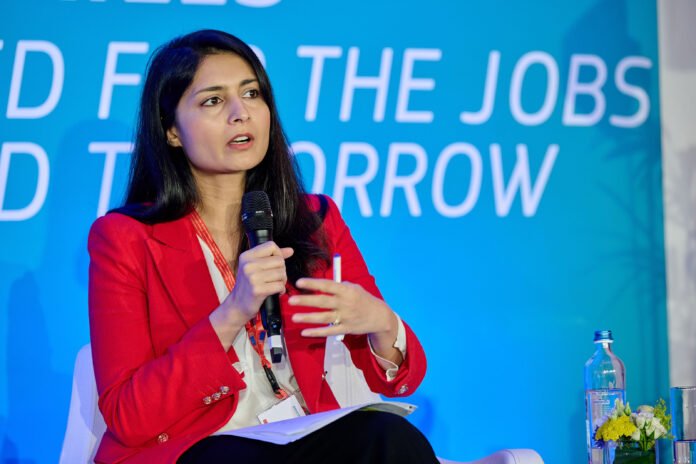
Saadia Zahidi is a Pakistani-born economist and a senior leader at the World Economic Forum (WEF). She currently serves as Managing Director and is a member of the Forum’s Managing Board, where she leads the Centre for the New Economy and Society. Her work focuses on labour markets, economic transformation, gender parity, and long-term workforce trends.
Zahidi’s role is primarily institutional and analytical. Her influence is exercised through global reports, indices, and comparative frameworks that are widely referenced by governments, businesses, and policy institutions.
Role at the World Economic Forum
As Managing Director, Zahidi oversees WEF’s work across several interconnected areas, including the future of jobs and skills, economic growth, productivity, and workforce participation. She also guides the Forum’s engagement with universities, think tanks, academic institutions, and its network of Global Future Councils, which examine emerging global challenges and opportunities.
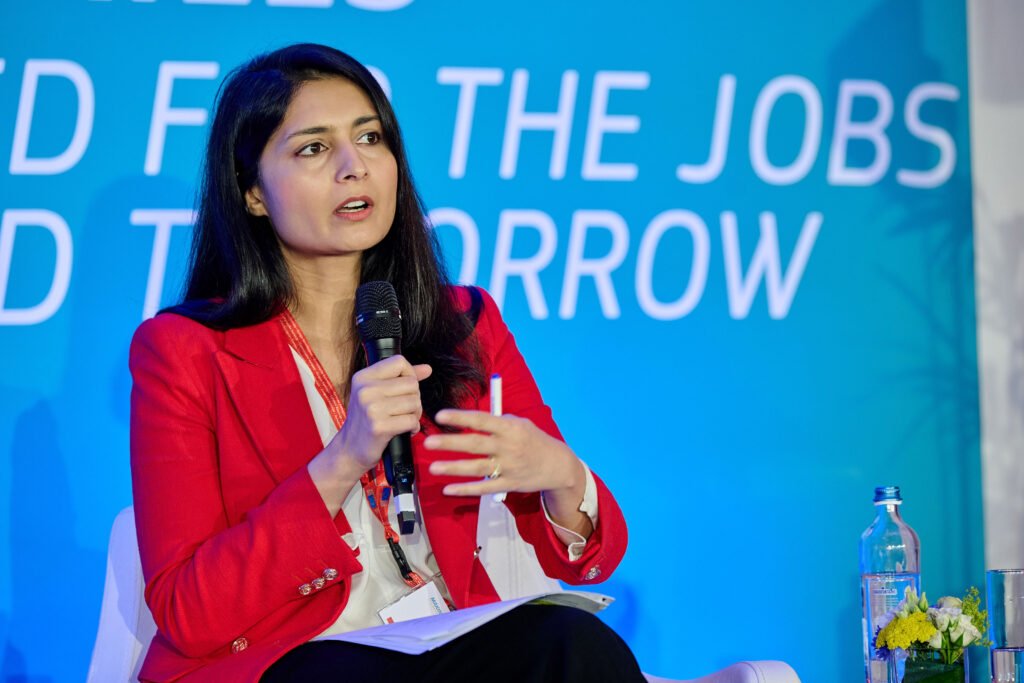
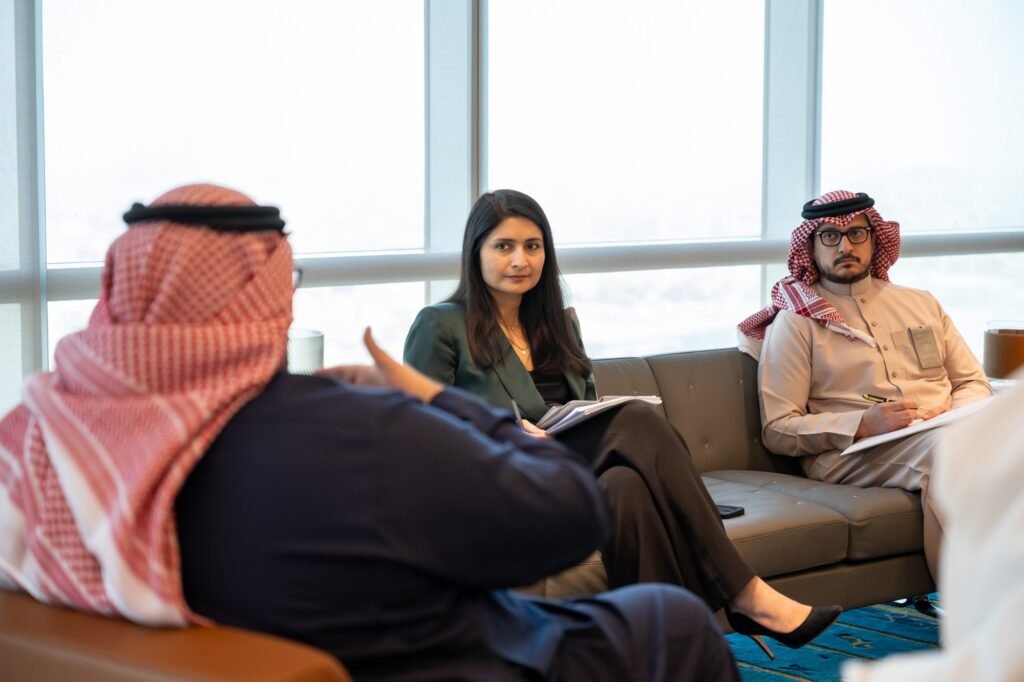
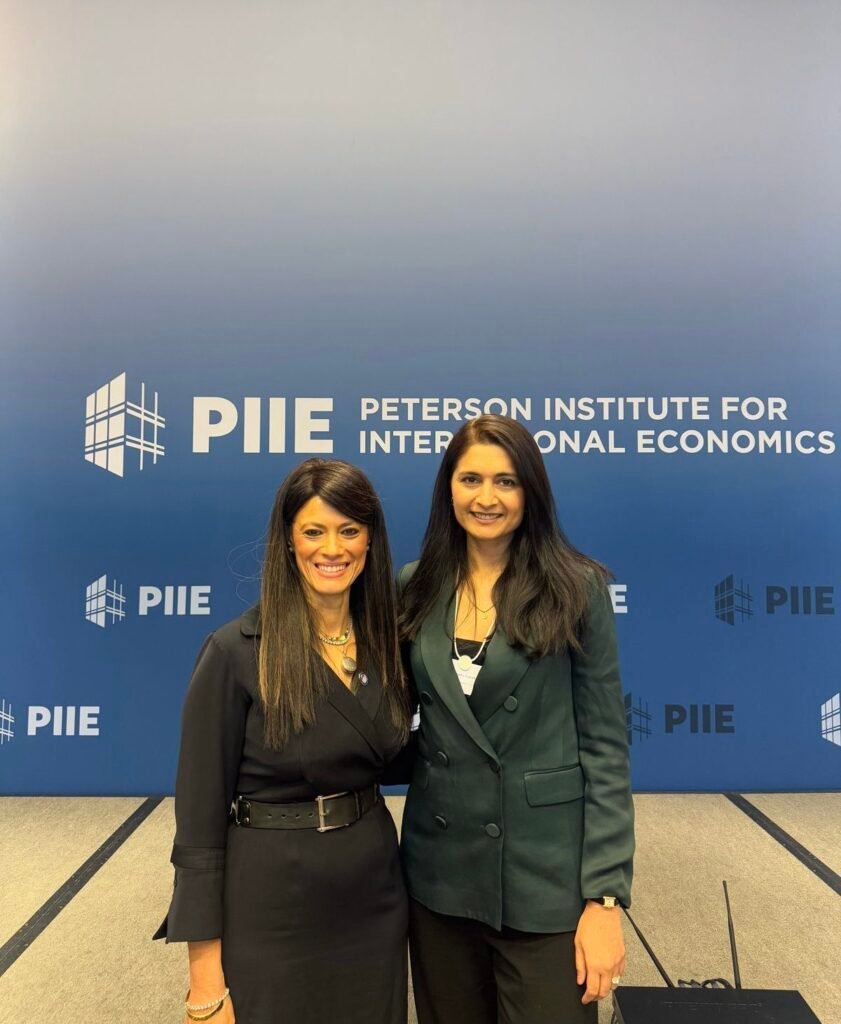
Her responsibilities place her at the centre of how the Forum analyses structural shifts in the global economy, particularly those affecting employment, skills, and inclusion.
Career Progression Within WEF
Zahidi has spent much of her professional career at the World Economic Forum. Prior to joining the Managing Board, she held leadership roles across communications, programming, and institutional engagement. These included heading the Global Communications Group, the Global Programming Group, and leading WEF’s engagement with civil society and international organisations.
This trajectory reflects a combination of research oversight, stakeholder coordination, and institutional leadership, shaping how WEF’s ideas are developed and disseminated.
Research and Flagship Reports
Zahidi is a founder and co-author of several of WEF’s flagship research publications. These include the Future of Jobs Reports, Future of Growth Reports, Global Gender Gap Reports, and the Chief Economist Outlooks.
Among these, the Global Gender Gap Report is one of the Forum’s most cited outputs. It evaluates countries on economic participation, education, health, and political representation using standardized indicators. The report is descriptive in nature, focusing on measurement and comparison rather than policy prescription.
Academic Background
Zahidi holds a BA in Economics from Smith College, an MPhil in International Economics from the Graduate Institute of International and Development Studies, and a Master of Public Administration from Harvard University.
Her academic training underpins her work at WEF, which combines labour economics with public policy analysis.
Authorial Work: Fifty Million Rising
In addition to her institutional responsibilities, Zahidi is the author of Fifty Million Rising. The book examines rising female workforce participation across the Muslim world, focusing on demographic change, education, and economic incentives rather than ideological arguments.
The themes of the book closely align with her professional focus on labour markets and economic participation.
Views on Global Business and Geoeconomic Risk
In public discussions around the World Economic Forum’s annual meeting at Davos, Zahidi has highlighted geoeconomic tensions as a significant risk for global businesses. She has pointed to trade disruptions, tariff uncertainty, supply-chain fragmentation, and geopolitical instability as factors influencing growth prospects.
She has also noted that companies increasingly integrate geopolitical risk into investment decisions, workforce planning, and long-term strategy, reflecting a shift in how global risk is assessed.
Impact on India
Saadia Zahidi does not regularly make India-specific public statements or policy recommendations. However, her work has an indirect but measurable influence on how India is evaluated in global economic and labour discussions.
Through the Global Gender Gap Report and the Future of Jobs Reports, India is assessed alongside other economies on indicators such as female labour force participation, skills readiness, wage disparities, and employment trends. These assessments are based on standardized data and comparative frameworks rather than country-specific advocacy.
The findings from these reports are frequently cited by Indian policymakers, media, corporates, and research institutions. As a result, Zahidi’s influence on India lies primarily in shaping the metrics and analytical lenses through which India’s workforce and gender outcomes are viewed globally, rather than in direct commentary on Indian policy choices.
A Measured Institutional Figure
Saadia Zahidi’s work is best understood in the context of institutional research and global economic analysis. Her role centres on developing frameworks, indices, and long-term assessments that inform decision-making across governments and businesses. In doing so, she contributes to global discourse on labour markets and economic transformation, including discussions that affect India, without positioning herself as a country-specific commentator or advocate.

