


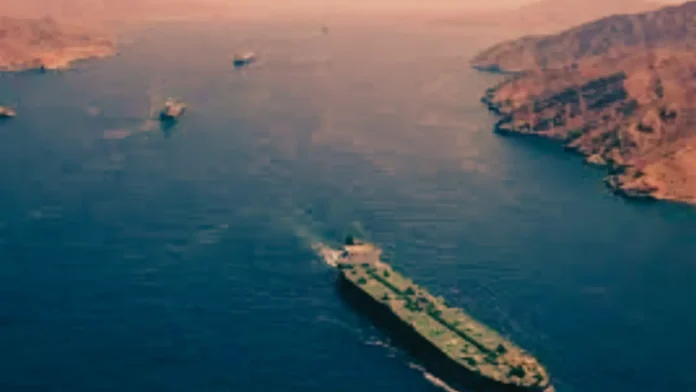
The 2026 decision by the United States to enforce a naval blockade targeting Iranian ports via the Strait of Hormuz marks one of the most consequential geopolitical escalations in recent decades. While officially framed as a targeted restriction on Iranian maritime trade, the move carries far-reaching implications for global energy markets, international law, and power dynamics—especially involving China.
This development is not just a regional flashpoint. It represents a structural shift in how economic warfare, naval power, and energy security intersect in the modern world.
What Is the Hormuz Strait and Why Does It Matter
The Strait of Hormuz is one of the most critical maritime chokepoints on Earth. Located between the Persian Gulf and the Gulf of Oman, it serves as a gateway for oil exports from major producers such as Saudi Arabia, the UAE, Kuwait, Iraq, and Iran.
- Nearly 20% of the global oil supply passes through this narrow corridor
- It is essential for both crude oil and liquefied natural gas (LNG) shipments
- Any disruption can trigger immediate global price shocks
Control over this strait translates directly into leverage over the global economy.
Understanding the U.S. Blockade Strategy
The United States, through its Central Command (CENTCOM), has clarified that:
- The blockade targets only vessels linked to Iranian ports
- Ships traveling to non-Iranian Gulf countries will not be impeded
- Enforcement will apply to vessels of all nations dealing with Iran
This distinction is critical. It attempts to balance two conflicting objectives:
- Punish Iran economically
- Avoid disrupting global trade entirely
However, such selective enforcement is extremely difficult in practice due to complex shipping routes and ownership structures.
Is a Naval Blockade an Act of War?
Under international maritime law, a blockade is widely interpreted as a belligerent act.
- Preventing ships from entering or leaving a country’s ports constitutes the use of force
- Historically, blockades have been associated with formal wartime conditions
A notable precedent is the Cuban Missile Crisis (1962), where the U.S. deliberately used the term “quarantine” instead of blockade to avoid legal escalation.
In contrast, the current approach openly embraces the term “blockade,” signaling a more aggressive geopolitical posture.
Why China Is the Real Target
Although Iran is the immediate focus, the blockade’s deeper strategic target appears to be China.
China’s Dependence on Iranian Oil
- Imports 1.5–1.6 million barrels/day from Iran
- Accounts for over 90% of Iran’s oil exports
- Makes up 15–16% of China’s total crude imports
The “Shadow Trade” Network
China has developed sophisticated mechanisms to bypass sanctions:
- Use of “shadow fleet” tankers with disguised identities
- Ship-to-ship transfers near Malaysia and the UAE
- Oil is relabeled and processed in independent “teapot” refineries
- Payments are increasingly made in Chinese yuan
The blockade directly disrupts this system, threatening both:
- Iran’s economic survival
- China’s energy security
Impact on Iran: Economic Lifeline at Risk
Iran’s economy is heavily dependent on oil exports, especially after years of Western sanctions.
- Current exports: 1.5–1.9 million barrels/day
- China is effectively its only major buyer
If the blockade succeeds:
- Iran could lose up to 1.5 million barrels/day in exports
- Government revenues would collapse
- Military and regional operations could be severely constrained
This explains Iran’s strong rhetoric and potential for retaliatory action.
India’s Position: Limited Direct Impact, Big Indirect Risks
India’s direct exposure to Iranian oil is currently minimal.
- Imports had dropped to near zero post-2019 sanctions
- A recent shipment signals only a symbolic re-engagement
However, India faces secondary consequences:
1. Rising Oil Prices
Global supply tightening could increase fuel costs, impacting inflation.
2. Supply Competition
India may face stiffer competition for oil from:
- Saudi Arabia
- Russia
- United States
3. Trade Disruptions
Exports such as basmati rice to Iran could decline due to payment and logistics issues.
Risk to Gulf Nations and Global Shipping
Even though the blockade targets Iran, the entire region is at risk.
Key Concerns
- Gulf nations rely on the same shipping route
- Iran has previously used:
- Naval mines
- Drones
- Fast-attack boats
Potential Scenarios
- Limited disruption: Only Iranian exports affected
- Escalation: Iran disrupts broader shipping
- Full crisis: Closure of the Strait of Hormuz
A full shutdown would be catastrophic, removing massive volumes of oil from the market.
Global Oil Market Shock: A 1970s-Level Crisis?
The current situation could trigger the biggest energy disruption since the 1970s oil crisis.
Key Estimates
- 9–11 million barrels/day are already affected
- Potential loss of 1.5 million barrels/day from Iran alone
If Escalation Occurs
- Massive price spikes
- Supply shortages
- Inflation surge globally
- Central banks are forced into tighter monetary policies
This could slow down global economic growth significantly.
Public Perception and Global Reactions
Public opinion reflects deep divisions:
- Some view the U.S. move as strategic deterrence
- Others see it as economic coercion or “global policing.”
There is also growing concern about:
- A potential U.S.–China confrontation
- Expansion into a multi-regional conflict
Conclusion
The Hormuz Strait blockade is not just a tactical move against Iran—it is a strategic gambit with global consequences.
It intersects multiple fault lines:
- Energy security
- Maritime law
- U.S.–China rivalry
- Middle East stability
If managed carefully, it could pressure Iran economically without triggering broader conflict. However, miscalculation or escalation could transform this into a full-scale global crisis affecting economies, trade routes, and geopolitical alliances.

