


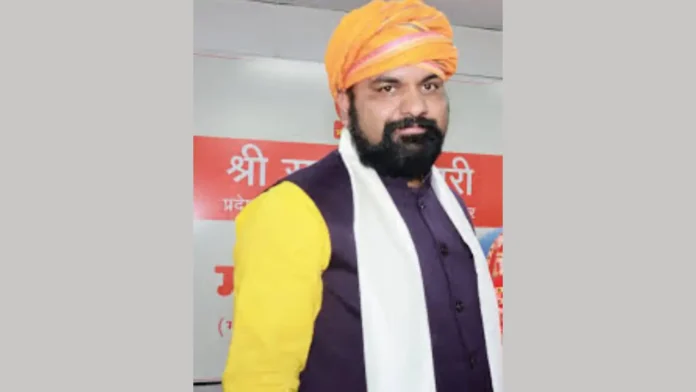
April 14, 2026 may redefine Bihar politics. With Nitish Kumar stepping down, the state stands at a turning point.
At the centre of this shift is one name—Samrat Choudhary.
He is no longer just a senior BJP leader. He has emerged as the face of a new political phase. His journey is not simple. It moves across ideologies, alliances, and strategies.
Early Life and Political Legacy
Samrat Choudhary was born on 16 November 1968 in Munger, Bihar. Politics shaped his upbringing.
His father, Shakuni Choudhary, held strong influence in state politics. He served multiple terms as MLA and MP. His mother, Parvati Devi, also served as an MLA.
This environment gave Samrat early exposure to political thinking. He did not enter politics as an outsider. He grew into it.
Learning Politics Under Lalu Prasad Yadav
He began his political journey in the 1990s. At that time, Bihar politics revolved around Lalu Prasad Yadav.
Samrat worked within this ecosystem. He learned grassroots mobilisation and power dynamics.
In 1999, he became a minister in the government led by Rabri Devi. He handled the agriculture portfolio at a young age.
This phase built his political base. However, it also defined him as part of Lalu’s political circle.
Turning Point: Shift to BJP
His career changed direction when he moved towards the Bharatiya Janata Party.
This shift was strategic. BJP was expanding in Bihar. It needed leaders who understood caste equations and grassroots politics.
After joining, his rise was fast:
- He took up organisational roles
- He became a key voice in the party
- He gained visibility at the state level
Within a few years, he moved from a regional leader to a central figure in Bihar BJP.
Rapid Rise Inside BJP
Once inside BJP, his growth followed a clear trajectory.
He became:
- State Vice President
- Member of Legislative Council (MLC)
- Leader of Opposition in the Legislative Council
- Bihar BJP State President
Each role increased his influence. More importantly, it strengthened his connection with party workers and leadership.
Becoming Deputy Chief Minister
His elevation to Deputy Chief Minister marked a major shift.
He entered the core of governance. He handled key departments like finance and later the home ministry.
As Home Minister, he adopted a firm approach:
- Strong action against crime
- Focus on faster policing response
- Direct messaging to criminals
His style reminded many of strict administrative models seen in other states. This strengthened his image as a decisive leader.
The ‘Aggressive Leader’ Image
Samrat Choudhary built a distinct political identity. He does not avoid confrontation. Instead, he uses it as a strategy.
He openly challenged Nitish Kumar during political conflicts. He even took symbolic steps to show commitment to his goals.
This approach achieved two things:
- It energised party workers
- It impressed central leadership
As a result, he emerged as a trusted face within the party.
Caste Strategy: The Real Power Factor
Bihar politics runs on caste equations. Samrat Choudhary belongs to the Kushwaha (Koeri) community, a key OBC group.
This matters for several reasons:
- OBC voters decide electoral outcomes
- Kushwaha community holds significant influence
- BJP aims to expand beyond its traditional vote base
By promoting Samrat, BJP strengthens its position among backward classes. This move directly impacts traditional vote banks.
Why He Became a Trusted Leader
A key question arises—how did he gain trust despite not coming from a traditional ideological background?
The answer lies in his working style:
- He delivers clear political messaging
- He maintains strong organisational control
- He adapts quickly to changing situations
He proved that he can both strategise and execute. That balance matters in politics.
Challenges Along the Way
His journey has not been smooth.
He has faced:
- Criticism from opposition parties
- Questions about his past political affiliations
- Internal competition within BJP
Despite this, he has continued to rise. This shows his ability to navigate complex political environments.
The Road to Chief Ministership
Today, Samrat Choudhary stands at a crucial point.
With Nitish Kumar stepping aside, the leadership space has opened up. Samrat fits into this moment perfectly.
He has:
- Administrative experience
- Strong caste backing
- Support from party leadership
All these factors place him close to the top position.
Conclusion
Samrat Choudhary’s journey is not just about power. It is about timing, strategy, and adaptability.
He started in one political camp. He shifted when needed. He built influence step by step.
Now, he stands as a symbol of change in Bihar politics. Whether he officially becomes Chief Minister or not, his role will shape the state’s future.
His story reflects a larger truth—politics rewards those who understand both people and power.

