


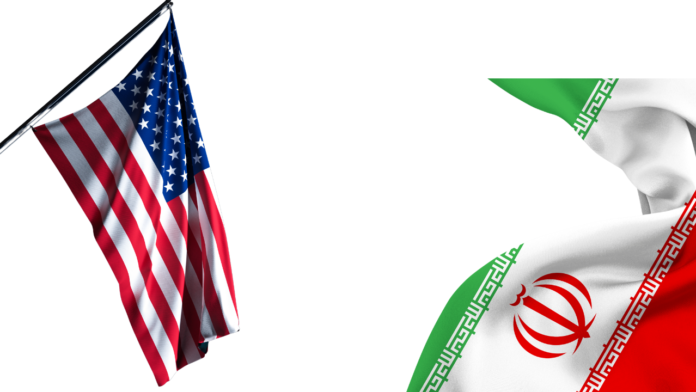
In what is becoming a recurring pattern in the 2026 Iran war, Washington and Tehran are once again sending sharply contradictory signals — this time over whether fresh peace talks are even happening. The White House confirmed on Friday that US special envoy Steve Witkoff and President Trump’s son-in-law Jared Kushner are travelling to Islamabad on Saturday for what it called “direct peace talks” with Iran. Iran’s Foreign Ministry, with equal confidence, said there would be no such meeting.
Who’s in Islamabad
US Side Steve Witkoff (Special Envoy) & Jared Kushner (Trump adviser) — travelling Saturday. VP JD Vance on standby in Washington.
Iran Side FM Abbas Araghchi — arrived in Islamabad but denied any direct meeting with US officials.
Mediator Pakistan — PM Shehbaz Sharif, FM Ishaq Dar, and Army Chief Field Marshal Asim Munir.
White House press secretary Karoline Leavitt told Fox News that the US envoys were going to Islamabad to “hear the Iranians out” and expressed hope the visit would “move the ball forward to a deal.” She noted the administration had seen “some progress” from Tehran in recent days, without elaborating. Vice President JD Vance, who led the US delegation during the first Islamabad Talks on April 11–12, will not travel this time but remains “deeply involved,” she said, and is on standby to join if talks advance.
Iranian Foreign Minister Abbas Araghchi did arrive in Islamabad — but on his own terms. Writing on X before landing, he described his itinerary as a “timely tour of Islamabad, Muscat, and Moscow” focused on bilateral coordination, with no mention of US negotiations. Foreign Ministry spokesman Esmaeil Baghaei was blunter: there were “no plans for a meeting between Iran and the US,” he said, adding that Iran’s position would be “conveyed to Pakistan” by Araghchi — not delivered directly to American envoys. Pakistani mediators, meanwhile, were described by Al Jazeera’s Islamabad correspondent as “cautiously optimistic.”
“No meeting is planned to take place between Iran and the US. Iran’s observations would be conveyed to Pakistan.” — Iranian FM Spokesperson Esmaeil Baghaei
The Islamabad Process: Round Two?
The first round of US-Iran talks in Islamabad — a historic direct engagement, the first of its kind since 1979 — lasted 21 gruelling hours over April 11 and 12, beginning with indirect sessions before both sides sat face to face. The US demanded that Iran dismantle its nuclear programme, curtail its missile arsenal, reopen the Strait of Hormuz, and cut support for regional armed groups. In return, Washington offered sanctions relief. Iran flatly rejected the proposal and issued a five-point counter-demand: an end to US-Israeli attacks, security guarantees, war reparations, and international recognition of its sovereignty over the Hormuz Strait. The talks ended without a breakthrough.
A second round had been expected to begin on Tuesday, but collapsed before it started — Iran signalling it was not ready to commit. President Trump unilaterally extended the ceasefire without specifying a new deadline, buying diplomatic breathing room. Now, with Witkoff and Kushner en route and Araghchi in the Pakistani capital, a heavily hedged second attempt appears underway — even if neither side will describe it in the same terms.
Pakistan’s role in all of this has been nothing short of a geopolitical reinvention. Prime Minister Shehbaz Sharif, Field Marshal Asim Munir — elevated after the 2025 conflict with India — and Foreign Minister Ishaq Dar have positioned Islamabad as the indispensable backchannel between two powers that share no diplomatic ties. Pakistani officials have begun framing the process as the “Islamabad Process,” signalling an intent to institutionalise the role rather than leave it as a one-off.
India’s Uncomfortable Ringside Seat
What this means for India
90% of India’s LPG imports transit the Strait of Hormuz. Iran’s blockade of the strait sent crude oil prices from $80 to $120 per barrel, driving a 7% rise in household cooking fuel costs and street protests over LPG shortages.
India faces a shortfall of roughly 2 million tonnes of urea by August 2026, with fertiliser subsidies heading toward a record $18 billion as import costs surge.
Pakistan’s emergence as the primary US-Iran mediator has drawn sharp domestic criticism. Congress leader Rahul Gandhi called it a “failure of the Modi government’s foreign policy” and a “joke.” Analysts at The Wire described it as “a stinging strategic setback for New Delhi.”
India has officially maintained neutrality, with the Ministry of External Affairs calling for a ceasefire — but New Delhi has not been part of any mediation track, watching a rival occupy ground it might have claimed.
For New Delhi, the Islamabad talks carry a significance beyond the immediate conflict. India has maintained studied neutrality since the war began on February 28 — condemning strikes on American bases while carefully avoiding naming Iran, and expressing concern over disruptions to the Strait of Hormuz, through which 90% of India’s LPG imports pass. The closure of the strait drove crude oil prices from $80 to $120 a barrel in early March, triggering fuel shortages and protests at home. India now faces a fertiliser crisis, with a urea shortfall of around 2 million tonnes expected by August and subsidy costs heading toward a record $18 billion.
What has stung at least as much is watching Pakistan occupy the diplomatic high ground. The Straits Times noted that India was experiencing “heartburn” over Islamabad’s visible role as a mediator — a direct challenge to New Delhi’s self-image as South Asia’s indispensable power. The Wire called it “a stinging strategic setback” for a government that had built its foreign policy reputation on isolating Pakistan and projecting India as the “Vishwaguru” under Prime Minister Modi’s leadership. Congress leader Rahul Gandhi called Pakistan’s growing global influence proof that the Modi government’s foreign policy had become “a joke.”
The Wider Picture: Hormuz, Hezbollah, and a Fragile Truce
The diplomatic manoeuvring in Islamabad is unfolding against a backdrop of continuing instability. Iran has mined the Strait of Hormuz — with a Pentagon assessment suggesting it could take up to six months to fully clear — and has attacked ships in the waters beyond. US Defence Secretary Pete Hegseth said the “blockade is tightening by the hour,” while dismissing European allies with pointed bluntness: “This is much more their fight than ours.” A separate Israel-Lebanon ceasefire, extended by three weeks this week, is also under strain: Israeli forces struck Hezbollah positions in southern Lebanon on Friday, and Hezbollah fired rockets back into Israel, all while the ink on the extension was barely dry.
Whether Witkoff and Kushner return from Islamabad with a framework, a fresh impasse, or merely another round of conflicting press statements remains to be seen. What is clear is that Pakistan — until recently viewed by Washington as a strategic liability — has placed itself at the centre of one of the most consequential diplomatic processes of the decade. And India, for all its economic exposure to this conflict, remains, for now, a spectator.

