


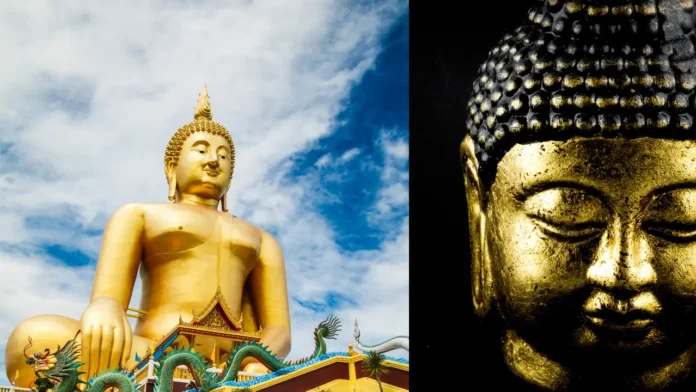
The most sacred day in the Buddhist calendar — marking the birth, enlightenment, and passing of Gautama Buddha — arrives under a full moon tonight.
May 1, Friday, 2026 — observed date
National Gazetted public holiday in India
3 Events: Birth, enlightenment & Mahaparinirvana
As the full moon of the Vaishakha month rises over India tonight, millions of Buddhists, Hindus, and spiritual seekers across the country prepare to observe one of the most luminous days in the sacred calendar. Buddha Purnima — also known as Vesak or Buddha Jayanti — will be celebrated on Friday, May 1, 2026, a gazetted public holiday across India. The occasion honours three pivotal moments in the life of Siddhartha Gautama that, remarkably, all fell on the same lunar date: his birth, his enlightenment, and his Mahaparinirvana.
The Purnima Tithi begins at 11:23 PM tonight, April 30, and continues through 11:08 PM on May 1 — which is why the festival is observed on May 1, as the full moon remains fully active throughout that day. Temples across India, from the Mahabodhi Temple in Bodh Gaya to the ancient ruins of Sarnath, will open their gates to pilgrims who travel from across the globe to mark this sacred convergence.
The three sacred milestones
Birth 563 BCE · Lumbini, Nepal
Prince Siddhartha was born in the sacred Lumbini Garden. According to scripture, the infant took seven steps — declaring it his last rebirth.
Enlightenment 528 BCE · Bodh Gaya, India
At 35, after years of meditation beneath the Bodhi tree, Siddhartha attained Nirvana and realised the Four Noble Truths.
Mahaparinirvana 483 BCE · Kushinagar, India
At 80, the Buddha attained his final liberation in Kushinagar, transcending the cycle of birth and death.
“As the full moon of Vaishakha bathes the world in its celestial glow, Buddha Purnima reminds us that enlightenment is within reach — not through possessions, but through inner transformation.”
Tithi timings for 2026
Purnima Tithi schedule
Tithi begins 11:23 PM, April 30, 2026
Tithi ends 11:08 PM, May 1, 2026
Observed on Friday, May 1, 2026
Why May 1? Full moon is active the entire day
How to observe Buddha Purnima
1 Visit a vihara or temple Offer flowers, incense, and lamps. Listen to monks recite ancient scriptures and give talks on the Dharma.
2 Offer kheer, sweet rice pudding, offered to Buddha by a village girl named Sujata before his enlightenment, is the traditional prasad of this day.
3 Meditate & fast Spend time in silent reflection. Observe a sattvic diet — avoid meat, onion, and garlic. Many wear white robes as a sign of purity.
4 Free caged animals. A beloved tradition — buying and releasing caged birds symbolises the Buddha’s teaching of compassion and liberation for all beings.
5 Hoist the Buddhist flag. After sunrise, the five-colour flag is raised at temples. Each colour carries meaning — blue for compassion, orange for wisdom, yellow for the Middle Path.
6 Give to the needy. Donating food, clothes, and water on this day is considered especially meritorious and in keeping with the Buddha’s teaching of selfless service.
Buddha Purnima became an official global Buddhist holiday in 1950, when the World Fellowship of Buddhists convened in Sri Lanka and formally established Vesak as a unified day of observance to honour the Buddha’s birth, life, and passing. Today it is celebrated across Sri Lanka, Thailand, Japan, Vietnam, Nepal, and beyond — each culture bringing its own colour and ceremony to the same full moon. In India, the grandest celebrations unfold at Bodh Gaya, Sarnath, Kushinagar, Ladakh, and Sikkim — places where the Buddha walked, taught, and attained liberation.
How Buddha Purnima is Celebrated Across the World
- India: Grand celebrations in Bodh Gaya, Sarnath, and Kushinagar
- Nepal: Lumbini hosts large-scale prayers and cultural events
- Sri Lanka, Thailand, Myanmar: Streets and temples are decorated with lanterns and flags
- Global: Celebrated as Vesak with meditation, teachings, and community service
Deeper Spiritual Meaning
Buddha Purnima is not just a festival—it is a reminder of:
- The Four Noble Truths
- The Eightfold Path
- The importance of mindfulness and compassion
It encourages individuals to step back from material pursuits and focus on inner peace, wisdom, and ethical living.
Important Do’s and Don’ts
Do’s
- Practice meditation and silence
- Help the needy
- Eat simple vegetarian food
Don’ts
- Avoid violence or harming animals
- Avoid alcohol and indulgence
- Avoid negative thoughts and speech
Final Thought
Buddha Purnima is a timeless reminder that enlightenment is possible through discipline, compassion, and awareness. In a fast-moving world, this sacred day invites us to slow down, reflect, and reconnect with our inner self—just as Gautama Buddha once did under the Bodhi tree.

