


A grassroots check-in, a ₹628 crore cooperative empire, and 75% profits going directly to farmers — here’s everything that happened in Dashela today
A Visit That Said Two Things at Once
On Sunday, May 17, 2026, Home Minister Amit Shah did two things in Gandhinagar that, on the surface, looked very different from each other.
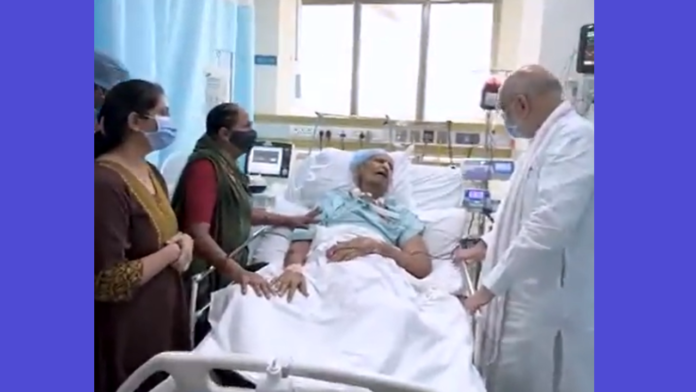
He inaugurated a massive, fully automated dairy plant worth ₹128 crore. And before that, he quietly walked into a hospital to check on a senior BJP worker named Rameshbhai Chaudhary from Dashela village — someone most of India has never heard of.
Together, these two gestures tell you a great deal about how Amit Shah operates in the one place he calls his own political home — Gandhinagar.
Why Rameshbhai Chaudhary Matters
Rameshbhai Chaudhary is not a minister. He is not a Member of Parliament. He is a senior BJP worker from Dashela — a village-level foot soldier who spent years doing the invisible work that makes elections possible. Booth management. Voter outreach. Ensuring turnout in the lanes and fields that television cameras never cover.
Shah visiting him in hospital was not accidental. It was deliberate. And it sent a clear message to every BJP worker across Gujarat — that the party’s leadership does not forget the people who built it from the ground up. This kind of personal connect is central to how Shah has maintained near-total loyalty among party cadre across decades. He knows names. He shows up. He remembers.
Gandhinagar is Shah’s Lok Sabha constituency. He has never lost an election since 1989 — fighting 29 elections across various levels and winning every single one. That record does not happen by accident. It happens because of exactly this kind of ground-level attention, multiplied across thousands of workers and villages over many years.
The Bigger Stage — Dashela’s ₹128 Crore Moment
The hospital visit was a private gesture. The dairy plant inauguration was very public.
At exactly 1:00 PM, Shah inaugurated Madhur Dairy’s brand new, fully automated milk processing and packaging plant at Dashela village in Gandhinagar district. The plant sits on 15 acres of land. It cost ₹128 crore to build. And it will process 2.5 lakh litres of milk every single day — with the capacity to scale up to 5 lakh litres as demand grows.
This is not just a factory opening. It is the next chapter in a 55-year cooperative story that quietly made Gandhinagar’s mornings possible.
Shah arrived late because of the intense afternoon heat. He acknowledged it right away. He apologised to the farmers and livestock rearers sitting under the sun and thanked them for staying back. It was a small moment — but it was noticed. “Today a new beginning is going to start in Dashela for the milk producer brothers and sisters of Gandhinagar district,” he told the gathering.
What Is Madhur Dairy — And How Did It Get Here?
Most people outside Gujarat have never heard of Madhur Dairy. But in Gandhinagar, it is as familiar as morning itself.
Madhur Dairy was registered on February 6, 1971. It started with just four milk cooperative societies. In those early days, farmers brought in 6,433 litres of milk per day. The annual turnover was around ₹7 lakh. By any measure, it was a modest beginning.
Then it kept growing.
Today, Madhur Dairy procures an average of 2.76 lakh litres of milk every single day from farmers across Gandhinagar district. Its annual turnover has climbed to nearly ₹628 crore. It runs a consumer cooperative society with 15,000 members and distributes milk through 230 centres across the district. Every morning in Gandhinagar, the tea in people’s homes is made from Madhur milk. That is the quiet dominance of a cooperative that grew not through investment banking or venture capital, but through the daily trust of farmers who showed up with their cans every morning.
Madhur Dairy is affiliated with the Gujarat Cooperative Milk Marketing Federation — the same body that runs Amul, the most successful dairy brand in Indian history. This places Madhur within a network that collects nearly 3 crore litres of milk every single day across Gujarat, powered by 3.6 million women livestock farmers.
The New Plant — What It Actually Does for Farmers
The new plant is fully automated. It uses modern milk processing and packaging technology that removes the risk of contamination, reduces waste, and allows Madhur Dairy to scale production without depending entirely on seasonal labour. That matters enormously for a cooperative whose members are small-scale farmers, not corporations.
But here is the most important number from today’s event — and it is the one Shah led with when he addressed the gathering.
After all operational expenses, 75% of the profits from the new plant will go directly into the bank accounts of livestock farmers. Not to middlemen. Not to institutional shareholders. Directly to the women and men who bring milk to the cooperative every morning.
Shah was direct about why this structure matters. He described the dairy sector as one of the strongest tools of women’s empowerment in rural Gujarat. He reminded the crowd that the people standing in front of him — the livestock rearer mothers and sisters — were the biggest beneficiaries of this plant, not the government and not the cooperative board.
With the new facility, Madhur Dairy’s total processing capacity now doubles to 5 lakh litres per day. This makes it the largest cooperative milk union in Gandhinagar district — a title that carries real weight in a state that practically invented the modern dairy cooperative model.
The Two-Day Visit — Everything Else Shah Did
The Dashela visit was the headline event of May 17. But Shah had started his Gujarat trip a day earlier, on Saturday, May 16.
He chaired six consecutive review meetings at the AMC South-West Zone office on Corporate Road in Ahmedabad by 2:30 PM. The meetings covered a wide range of issues — plantation drives planned across the Gandhinagar constituency ahead of the monsoon, modernisation of the Sarkhej-Gandhinagar Highway, restoration of ponds, and development works by the Gujarat Urban Development Company in Mansa municipality.
Deputy Chief Minister Harsh Sanghavi and Chief Secretary Manoj Kumar Das attended these meetings. The reviews were focused on real deliverables — specific projects with timelines, not general policy discussions.
Shah also met the newly elected corporators of the Ahmedabad Municipal Corporation during the visit. This matters because newly elected local representatives are often navigating institutional processes for the first time. A direct meeting with the Home Minister at the start of their tenure sends them a message: you are seen, your work is tracked, and the leadership is engaged.
Shah and the Gandhinagar Constituency — A Bond Built Over Decades
Gandhinagar is not just any constituency. It is one of the most prestigious parliamentary seats in India. Before Shah, the seat was held by Atal Bihari Vajpayee — who later became Prime Minister — and by L.K. Advani, who served as Deputy Prime Minister. Shah won it in the 2019 Lok Sabha election by a margin of 5,57,014 votes, with a 70% vote share. He retained it in 2024.
This seat did not fall into Shah’s lap. He spent years managing election campaigns for Advani in Gandhinagar before it became his own. He knows every district, every taluka, every dominant caste group, every cooperative body, and every senior party worker in this region. The hospital visit to Rameshbhai Chaudhary was not a photo opportunity. It was part of a long-maintained web of personal relationships that Shah has built — one worker, one village, one visit at a time.
That is why, even on a day dominated by a ₹128 crore inauguration, the hospital visit found its way into the headlines. Because for the BJP’s grassroots cadre, that kind of attention from their national leadership means everything.
The Cooperation Ministry — Shah’s Second Portfolio and Its Significance
Most people focus on Amit Shah as Home Minister. But his second portfolio — Minister of Cooperation — is directly relevant to everything that happened in Dashela today.
Shah became India’s first-ever Minister of Cooperation in July 2021, when Prime Minister Modi created the ministry specifically to strengthen India’s cooperative sector. The philosophy behind it is called “Sahkar se Samridhi” — prosperity through cooperation. The idea is simple. India has thousands of cooperative institutions in dairy, agriculture, credit, and retail. Most of them are underutilised, underfunded, or poorly managed. The Cooperation Ministry was set up to fix that.
The Madhur Dairy plant is a direct output of that vision. A ₹128 crore investment in a cooperative dairy structure, built to send 75% of its profits back to farmers, with the capacity to double output — this is exactly the kind of project the Ministry of Cooperation was designed to enable.
Shah made this connection explicit in his speech. He described the new plant as proof that the cooperative sector can evolve with changing times and continue to serve the people who built it from the ground up.
What This Means for Gujarat’s Dairy Sector
Gujarat is not just an important dairy state. It is the state that created the model that every other dairy cooperative in India tries to replicate.
Amul started in Anand in 1946 as a small farmers’ protest against exploitative middlemen. It became the template for the entire Indian dairy cooperative system — a system that today makes India the world’s largest milk producer. Madhur Dairy is part of that same network, operating in Gandhinagar under the GCMMF umbrella.
The new plant doubles the district’s processing capacity. It brings fully automated technology to a cooperative that has operated manually for over five decades. It adds a direct profit-sharing mechanism that rewards farmers in real time. And it positions Gandhinagar’s dairy sector to scale significantly over the next decade.
For the 2.76 lakh litres of milk that arrive at Madhur Dairy’s facilities every day — collected from tens of thousands of households across the district — the new plant means more reliability, better pricing, and a more predictable income from the one thing these families have always depended on.
The Full Picture
A hospital visit to a senior party worker. A ₹128 crore dairy plant inauguration. Six review meetings on development projects. A meeting with newly elected corporators. Speeches about women’s empowerment and cooperative economics.
This two-day visit to Gujarat covered a lot of ground — and every part of it was deliberate. Shah does not do casual visits. Each engagement connects to either his political base, his policy responsibilities, or his long-term hold over Gujarat as the state that anchors the BJP’s national dominance.
Rameshbhai Chaudhary may be a name most of India has never heard. But for the workers of Dashela — and for every booth-level BJP volunteer across Gandhinagar — that hospital visit was more meaningful than any inauguration. It said that no matter how large the stage gets, the man who now runs India’s Home Ministry still remembers where he came from.
And in Gujarat, that memory is everything.

