


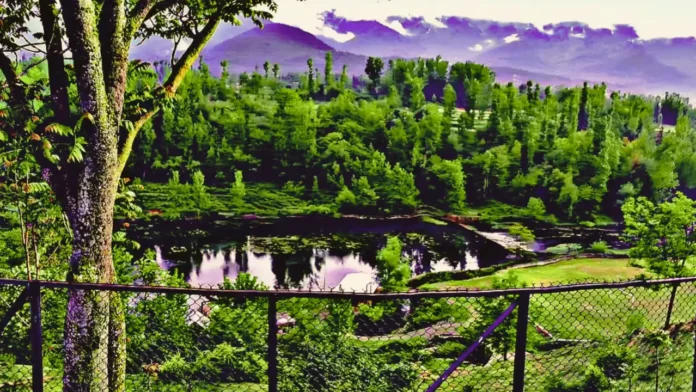
In the peaceful landscape of south Kashmir lies a place where water is not viewed merely as a natural resource. People treat it with reverence, memory, and emotional attachment. That place is Panzath Nag.
Situated near Qazigund in Jammu and Kashmir, Panzath Nag is among the Valley’s most culturally significant spring systems. For centuries, these springs have supported agriculture, supplied drinking water, and shaped the social life of nearby villages.
However, Panzath Nag is not known only for its natural beauty. Every year, it becomes the centre of a unique community tradition called the Gaade Maar festival. During this event, villagers step into the spring waters together to clean the channels, remove weeds and mud, and catch fish using traditional wicker baskets.
At first glance, the gathering appears festive and simple. Yet it carries deep cultural, ecological, and spiritual meaning.
What is Panzath Nag?
Panzath Nag is a cluster of freshwater springs located in the Anantnag region of south Kashmir near Qazigund. In Kashmiri, the word “Nag” means spring.
The name “Panzath” is believed to refer to the large number of springs that once existed in the area. Even today, the region remains rich in freshwater sources that continue to support village life.
These springs are essential for local communities. They irrigate fields, recharge groundwater, and provide water to nearby settlements. Farmers and villagers depend on them throughout the year.
Yet the relationship between people and these waters goes beyond practical needs.
For generations, locals have considered the springs sacred. Folk beliefs, oral traditions, and ancient Kashmiri culture have long connected natural springs with spiritual power and protection.
Kashmir’s Ancient Relationship With Springs
Water holds a special place in Kashmir’s cultural memory. Ancient communities across the Valley revered springs and associated them with serpent deities known as Nagas.
This tradition formed an important part of early Kashmiri civilisation. Over time, these beliefs blended with local spiritual practices and folk traditions.
Panzath Nag still reflects that legacy. Many villagers continue to speak of the springs with affection and respect. Some local traditions describe a protective spirit associated with the waters.
The area also developed spiritual links with Sufi culture over the centuries. As a result, the springs became symbols not only of nature, but also of harmony, continuity, and faith.
What is the Gaade Maar Festival?
The Gaade Maar festival is the most well-known tradition associated with Panzath Nag.
In Kashmiri, “Gaade Maar” roughly means “catching fish.” However, the event is much more than a fishing activity.
Every year, usually during spring or early summer, villagers gather around the springs carrying traditional wicker baskets. Men, women, children, and elderly residents participate together.
They enter the water to clean the spring beds, remove weeds, clear silt, and restore blocked channels. While carrying out this work, they also catch fish moving through the waters.
The atmosphere becomes lively and celebratory. Families cook food nearby, children participate with excitement, and entire communities spend the day together around the springs.
Many locals believe the tradition has continued for several centuries.
Why the Festival Holds Deep Importance
A Traditional Model of Environmental Protection
Long before modern environmental campaigns emerged, the people of Panzath Nag understood the importance of protecting water sources.
The annual cleaning improves water flow and helps preserve the health of the springs. Villagers know that clean water directly supports farming, daily life, and the local ecosystem.
Without using scientific terminology, the community follows a sustainable conservation practice rooted in tradition.
This is what makes the festival remarkable. It combines celebration with responsibility.
A Festival That Brings Communities Together
Gaade Maar also strengthens social bonds.
People from different villages come together during the festival. The event creates a strong sense of belonging and shared ownership.
Elders pass stories and customs to younger generations. Children learn the importance of protecting nature through participation rather than instruction.
For many residents, the festival represents unity and collective identity.
Older villagers also recall how different communities once celebrated the event together, making it a symbol of Kashmir’s shared cultural heritage.
The Ecological Importance of Panzath Nag
The springs of Panzath Nag play a major role in the region’s ecology.
They support irrigation systems, sustain aquatic life, and help maintain groundwater levels. The freshwater network also benefits surrounding villages and agricultural land.
However, environmental pressures have increased in recent years.
Climate change, irregular rainfall, pollution, plastic waste, and unchecked construction activities threaten many traditional water bodies across Kashmir.
Several springs in the Valley have already weakened over time.
This makes traditions like Gaade Maar even more valuable today. The annual cleaning not only protects the springs physically, but also keeps environmental awareness alive within the community.
Why Panzath Nag Deserves Greater Attention
Despite its significance, Panzath Nag remains relatively unknown outside Kashmir.
The site rarely appears in mainstream tourism discussions or environmental policy debates. Yet it offers a powerful example of how traditional culture and ecological responsibility can exist together.
In many parts of the world, old customs disappear with changing lifestyles. Panzath Nag shows that traditions can survive when communities continue to value them emotionally and socially.
The festival also highlights an important lesson. Conservation becomes stronger when people feel personally connected to nature.
That emotional connection still remains strong in Panzath.
Can Panzath Nag Inspire Other Communities?
Many observers believe the traditions of Panzath Nag can inspire community-led conservation efforts in other parts of India.
Across rural regions, ponds, lakes, and springs suffer because public participation has declined over time.
Panzath Nag demonstrates that environmental protection does not always require expensive systems or government intervention alone. Sometimes, communities themselves become the strongest guardians of nature.
At the same time, locals want development to remain balanced. They welcome recognition, but they also want the springs and traditions to remain protected from excessive commercialisation.
Maintaining that balance will shape the future of Panzath Nag.
A Living Tradition That Continues to Flow
In a rapidly changing world, Panzath Nag stands as a symbol of continuity.
The springs still flow through the Valley. The stories still survive among the people. The festival still unites communities every year.
For one special day, villagers step into the waters not only to catch fish, but also to protect a shared cultural memory.
That is why Panzath Nag matters.
It is not merely a spring in Kashmir. It is a living example of how culture, faith, community, and environmental responsibility can continue to flow together across generations.

