


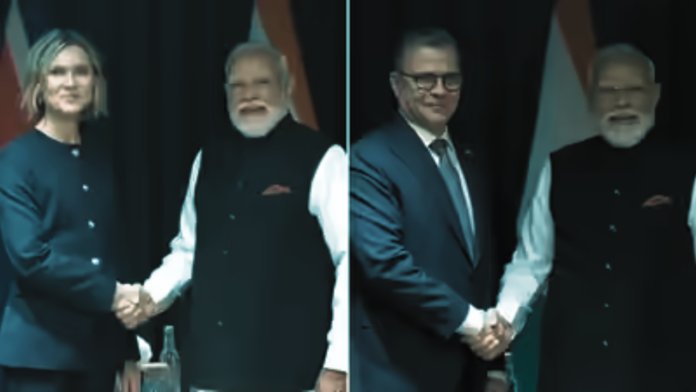
From Abu Dhabi to Rome — A Country-by-Country Breakdown of Every Major Win
Six days. Five countries. Dozens of agreements. Prime Minister Narendra Modi’s tour from May 15 to 20, 2026 — covering the UAE, Netherlands, Sweden, Norway, and Italy — was not just a diplomatic exercise. It was a carefully timed push to protect India’s economic interests, lock in strategic alliances, and position the country as a global manufacturing and technology hub.
The timing was deliberate. The West Asia war had disrupted the Strait of Hormuz, through which India sources roughly half its crude oil. Energy markets were under pressure. Global supply chains were shifting. And India had just signed the India-EU Free Trade Agreement in January 2026 — described by Modi himself as the “mother of all deals.” This tour was about turning all of that into concrete outcomes. Let’s go country by country.
Why This Tour Was Different
Before diving into the specifics, it is worth understanding what makes this tour stand out.
India is no longer just seeking investment or aid. It is negotiating as a peer — offering its scale, its manufacturing ambition, and its technology infrastructure in exchange for expertise, capital, and strategic alignment. Every stop on this tour reflected that shift. And the outcomes, across energy, semiconductors, clean tech, AI, and defence, show that other countries are responding to India on those terms.
UAE: $5 Billion, Defence Pact, and Energy Security
The first stop set the tone. UAE President Sheikh Mohamed bin Zayed Al Nahyan personally received Modi at the Abu Dhabi airport — a rare diplomatic gesture that speaks volumes about the warmth of the relationship.
The concrete outcomes were substantial. India and the UAE signed a Strategic Defence Partnership — a formal framework for cooperation on defence manufacturing and security. Both sides also signed energy MoUs covering LPG supplies and strategic petroleum reserves. This is critical. With the Strait of Hormuz under stress, India needs alternative energy supply arrangements and reserve buffers. The UAE deal directly addresses that vulnerability.
Beyond energy, the visit produced $5 billion in investment commitments targeting Indian infrastructure and banking. The UAE is already India’s third-largest trade partner and one of the top sources of foreign investment over the past 25 years. This visit deepened that relationship further. And with 4.5 million Indians living in the UAE, the welfare of the diaspora also found a place in the discussions. In short, India walked away from Abu Dhabi with energy protection, defence alignment, and fresh capital.
Netherlands: The Semiconductor Breakthrough and 17 Deals
The Netherlands leg of the tour was arguably the most consequential for India’s long-term technology future.
India and the Netherlands elevated their bilateral relationship to a full Strategic Partnership — and backed it with 17 major outcomes spanning semiconductors, defence, agriculture, water management, education, and cultural heritage.
The headline deal was between Tata Electronics and ASML — and it deserves special attention. ASML is the only company in the world that manufactures extreme ultraviolet (EUV) lithography machines. These machines are essential for making the most advanced chips. Without them, there is no cutting-edge semiconductor industry. ASML signed an agreement to supply its advanced lithography tools to Tata Electronics’ Dholera Fab — India’s first major semiconductor fabrication plant. The government called it “game-changing” for India’s semiconductor ecosystem. That is not an exaggeration.
Additionally, both countries adopted an ambitious Green Hydrogen Roadmap to support India’s production, usage, and export of green hydrogen. They also signed a Letter of Intent for technical cooperation on the Kalpasar project in Gujarat — a massive tidal estuary dam project that could transform water management in the state. The Netherlands also announced it would join the Indo-Pacific Oceans Initiative, signalling stronger engagement with India’s strategic interests in the region.
And then came a historic cultural win. The Netherlands returned centuries-old Chola-era copper plates to India — a major diplomatic and cultural victory for New Delhi.
Sweden: Strategic Partnership, AI Corridor, and a Trade Doubling Target
From the Netherlands, Modi moved to Gothenburg, Sweden. The visit built on a long-standing relationship and took it to a new level.
India and Sweden formally elevated their bilateral ties to a Strategic Partnership. The two sides then launched two significant initiatives: the Joint Innovation Partnership 2.0 and the India-Sweden Technology and Artificial Intelligence Corridor. The AI Corridor, in particular, signals intent — both countries want to co-develop technology, not just trade it.
Modi and Swedish PM Ulf Kristersson also set an ambitious target: doubling bilateral trade from the current $7.75 billion within five years. To put that into perspective, they want to reach roughly $15 billion in trade by 2030-31. During the visit, Modi also addressed the European Round Table for Industry alongside EU Commission President Ursula von der Leyen — sending a clear message to European businesses that India is open, ambitious, and ready.
Norway: First PM Visit in 43 Years and a Green Strategic Partnership
Norway was a historic stop in every sense. This was the first visit by an Indian Prime Minister to Norway in over four decades.
Modi arrived in Oslo on May 18, and the visit quickly produced substance. India and Norway agreed to elevate their relationship to a Green Strategic Partnership — a framework focused on clean energy, circular economy, climate action, and sustainable industrial growth. Both countries signed 12 agreements and initiatives spanning climate, maritime cooperation, space, digital technologies, and health.
On health, Norway’s PM Jonas Gahr Store was direct: “We are strengthening our cooperation in health — a lot to learn from India.” Both sides signed an MoU on high-tech health services, digital health, AI, research, and health technology.
Modi also addressed the India-Norway Business and Research Summit, where he met CEOs from energy, offshore wind, maritime, fertilizers, food security, robotics, and healthcare sectors. Together, the participating companies represent a market capitalisation of nearly $200 billion. That is the scale of economic engagement Norway is willing to bring to the table.
Then came the India-Nordic Summit — the third of its kind — where Modi sat with the leaders of Norway, Denmark, Finland, Iceland, and Sweden. The summit focused on renewable energy, AI, Arctic cooperation, defence, space, and supply chain resilience. Crucially, Norway’s Government Pension Fund — one of the world’s largest sovereign wealth funds — already holds close to $28 billion in Indian capital markets. Deeper ties here could translate into significantly larger investment flows into India over time.
One more dimension worth noting: India runs an Arctic research base on Norway’s Svalbard island. As Arctic sea ice melts, new shipping routes are opening up. India is watching closely — because shorter Arctic routes would cut shipping costs and times between Europe and Indian ports, reshaping trade economics fundamentally.
Italy: Cementing the India-EU FTA and Defence Co-Production
The final leg of the tour took Modi to Rome, where he held talks with PM Giorgia Meloni — one of his closest counterparts in Europe — and met President Sergio Mattarella.
Italy’s significance goes beyond bilateral trade. Italy sits at the heart of the European Union, and the conversations in Rome are directly tied to the freshly signed India-EU FTA. The visit focused on fast-tracking that agreement’s implementation and deepening defence co-production between the two countries. Both sides reviewed the Joint Strategic Action Plan 2025-2029 — a comprehensive roadmap covering security, clean energy, technology, and safe and legal migration frameworks.
The India-EU FTA, signed just five months earlier, opens up a market of over 450 million European consumers to Indian goods and services. Italy’s role in helping India navigate EU markets — particularly in engineering, pharmaceuticals, textiles, and defence manufacturing — is significant. And with Modi and Meloni sharing a genuine rapport, the political will to move quickly on implementation looks real.
The Bigger Picture: What India Actually Walked Away With
Step back, and the patterns become clear.
This was not a tour of handshakes and photo opportunities. Each stop addressed a specific strategic need. The UAE addressed energy security and capital. The Netherlands addressed technology sovereignty through the ASML deal. Sweden addressed the AI and innovation partnership. Norway addressed clean energy and long-term investment flows. Italy addressed the EU trade framework and defence co-production.
Collectively, India’s bilateral trade with all five countries exceeds $70 billion. Investments from these nations continue to rise. And across every stop, India presented itself not as a developing country seeking aid, but as a strategic partner offering scale, talent, and manufacturing capability in return for technology, capital, and market access.
The India-EU FTA hangs over all of it — creating a foundation for the next decade of economic engagement between India and Europe. Modi called it the “mother of all deals.” This tour was about making sure that deals deliver real results on the ground — in semiconductors, clean energy, AI, defence, and trade.
India is building a multi-polar economic network. This tour was a significant step in that direction.

