


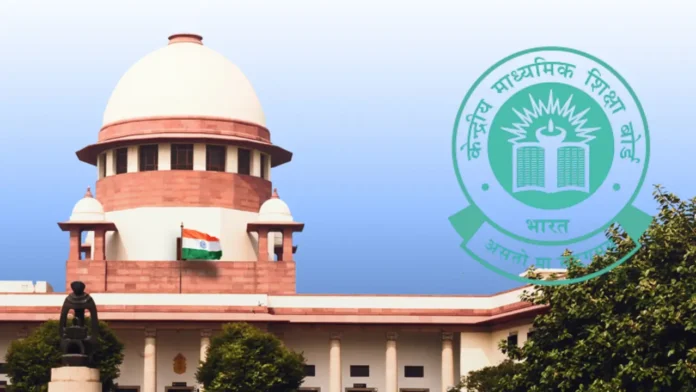
The Supreme Court has declined to grant interim relief against the Central Board of Secondary Education’s (CBSE) three-language policy, allowing the framework to remain in effect while legal challenges against it continue to be heard.
The decision comes amid growing debate over the implementation of the policy, which requires students in Classes 9 and 10 to study three languages, including at least two Indian languages.
What Is the CBSE Three-Language Policy?
The three-language formula is part of the broader educational reforms aimed at promoting multilingual learning among students. Under the policy, students are expected to study three languages during their secondary education, with a focus on encouraging the use and preservation of Indian languages.
Supporters of the policy argue that it strengthens linguistic diversity and aligns with the goals of the National Education Policy (NEP). However, critics have raised concerns about its practical implementation.
Supreme Court Declines Interim Relief
During recent proceedings, the Supreme Court refused to issue an interim order suspending the policy. This means that the CBSE can continue with its planned implementation while the court examines the legal and constitutional issues raised in the petitions.
The Court clarified that it would hear the matter in detail before arriving at a final conclusion but did not find sufficient grounds to stop the policy at this stage.
Why Has the Policy Been Challenged?
Several petitions have been filed questioning the implementation of the three-language formula. Petitioners have expressed concerns regarding the sudden introduction of the policy and its impact on students already pursuing specific language combinations.
Some have argued that schools may face challenges in arranging qualified language teachers and necessary learning resources. Others have highlighted the potential academic burden on students who are preparing for board examinations.
Concerns Raised by Parents and Schools
Parents and educators have voiced apprehensions about the readiness of schools to implement the policy effectively. Many institutions, particularly those offering foreign language options, may need additional infrastructure, trained faculty, and updated curriculum materials.
There are also concerns that students who have been studying foreign languages for several years could face disruptions if required to alter their language choices.
Government and CBSE Stand
Education authorities have maintained that the policy is designed to promote multilingual education and provide students with greater exposure to Indian languages and culture.
Officials believe the initiative will strengthen language skills and contribute to a more inclusive educational framework across the country.
Final Verdict Yet to Come
While the Supreme Court has allowed the policy to remain operational for now, the legal battle is far from over. The Court is expected to continue hearing arguments from petitioners, CBSE, and government representatives before delivering a final verdict.
The outcome of the case could have significant implications for schools, students, and educational institutions across India.
Conclusion
The Supreme Court’s decision not to stay the CBSE three-language policy has ensured that its implementation can move forward for the time being. However, with multiple concerns regarding infrastructure, student workload, and language choices still under scrutiny, the final judgment will be closely watched by parents, educators, and policymakers alike.
Until a definitive ruling is issued, the debate surrounding multilingual education and its implementation in Indian schools is likely to continue.

