


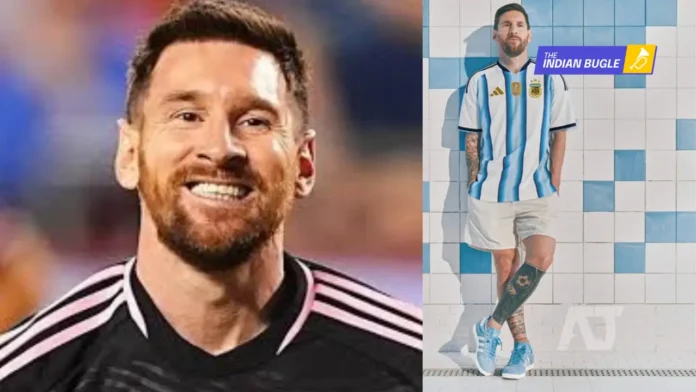
Fresh details have emerged about the cost and management of Lionel Messi’s G.O.A.T. India Tour 2025, revealing that the total expenditure for the high-profile visit stood at ₹100 crore. The information surfaced during an ongoing investigation into the chaotic Kolkata event, where crowd mismanagement and security lapses overshadowed what was meant to be a landmark sporting celebration.
How Much Did Lionel Messi’s India Tour Cost
According to disclosures made during the probe, the overall spending on Messi’s India tour amounted to ₹100 crore. Of this, approximately 30 per cent was raised through sponsorship deals, while another 30 per cent came from ticket sales. The remaining amount was managed through other event-linked arrangements, reflecting the massive commercial scale of the tour.
Messi’s Fee and Tax Paid to the Government
Investigators were informed that Lionel Messi was paid ₹89 crore for his appearance and participation in the India tour. In addition to the appearance fee, ₹11 crore was paid as tax to the Indian government. This breakdown confirms that the majority of the tour’s expenditure went directly towards securing the global football icon’s presence.
Role of the Main Organiser
The details were shared by Satadru Dutta, the main organiser of the Kolkata leg of the tour, during questioning by the Special Investigation Team. Dutta was arrested soon after the event, following allegations of mismanagement. He told investigators that the financial structure of the event was pre-planned, but execution issues later spiralled out of control.
What Went Wrong at the Kolkata Event
The Kolkata programme, held at Salt Lake Stadium, witnessed serious crowd control failures. Thousands of spectators who had purchased expensive tickets complained that they could barely see Messi, as large numbers of people crowded around him on the field. The situation triggered anger among fans, leading to vandalism in parts of the stadium.
Investigation Into Security Lapses
Following the chaos, a Special Investigation Team comprising senior IPS officers was formed to investigate the incident. The probe is examining security arrangements, access violations, and the role of organisers and officials in allowing unauthorised individuals onto the field.
Claim of Influence and Excess Access
During interrogation, Satadru Dutta claimed that only 150 ground passes were initially issued for the event. However, the number reportedly tripled after the arrival of what he described as an “influential person” who allegedly overpowered the organisers. Investigators are now assessing whether this sudden expansion of access directly contributed to the collapse of crowd control measures.
Messi’s Discomfort During the Event
Dutta also told investigators that Messi had clearly communicated, through his security team, that he did not like being touched or hugged. Despite repeated public announcements requesting the crowd to maintain distance, these instructions were ignored. According to Dutta, the manner in which Messi was surrounded on the field was unacceptable and caused visible discomfort to the football star.
Spotlight on West Bengal Sports Minister
West Bengal Sports Minister Aroop Biswas was seen standing close to Messi during the programme, with visuals showing him holding the footballer while posing for photographs. Biswas has faced allegations of using his influence to allow relatives and acquaintances access to the field. Amid mounting criticism, he resigned from his post pending completion of the investigation.
Ongoing Probe and Key Questions
Investigators are continuing to probe how such a large number of people gained access to the ground area despite security protocols. The SIT is also examining whether organisers ignored standard safety procedures in their attempt to accommodate influential guests and maximise visibility around the football icon.
The revelations around Lionel Messi’s ₹100 crore India tour have highlighted serious gaps between planning and execution. While the tour was designed as a grand sporting spectacle, lapses in crowd management, access control, and security turned the Kolkata event into a controversy. As the investigation continues, the case is likely to shape future protocols for hosting international sports icons in India, where public enthusiasm must be balanced with strict safety and organisational discipline.

