


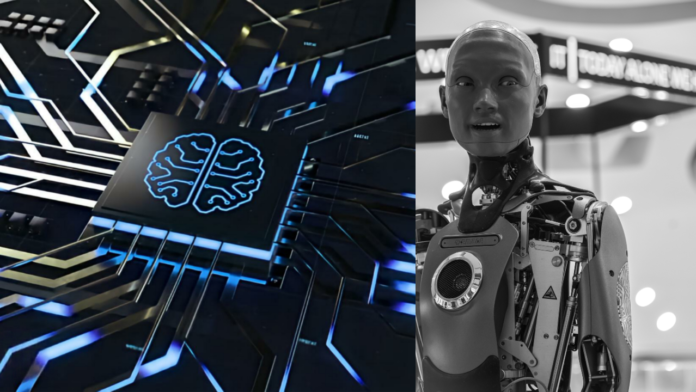
As the global race to develop artificial intelligence accelerates, India is carving out a unique place in the rapidly evolving robotics ecosystem. Across homes, offices, and factories, thousands of people are helping train the next generation of AI-powered robots—not by writing software, but by performing ordinary daily activities.
From folding clothes and washing utensils to packing products and arranging household items, these routine actions are being recorded and transformed into valuable training data that enables humanoid robots to learn how humans interact with the physical world.
The emerging industry is creating new employment opportunities while positioning India as an important contributor to the future of artificial intelligence.
Teaching Robots Through Human Actions
Unlike text-based AI systems that learn from books, websites, and digital documents, humanoid robots require real-world demonstrations to understand how physical tasks are performed.
To build this capability, companies record people carrying out everyday activities using wearable cameras, smartphones, or specially designed recording equipment. The footage captures hand movements, body posture, object handling, and decision-making from a first-person perspective.
This data is then used to train AI systems so that robots can gradually learn how to perform similar tasks independently.
Why Everyday Tasks Matter
Simple household activities involve complex motor skills that humans perform almost automatically.
For example, preparing tea requires picking up utensils, pouring liquids, adjusting grip, and responding to changing conditions. Folding clothes involves recognizing different fabrics, applying varying amounts of force, and making continuous adjustments.
These seemingly ordinary actions provide valuable information that helps AI developers improve robotic learning models.
India’s Growing Role in the AI Economy
India’s large workforce, digital infrastructure, and experience in technology services have made it an attractive destination for AI data collection.
Several startups and technology companies are working with individuals from diverse backgrounds, including homemakers, factory workers, students, and gig workers, to build extensive datasets for robotics training.
By contributing large volumes of human behavioural data, India is becoming an important part of the global AI supply chain.
A New Kind of Job
The rise of AI training has also created a new category of work.
Participants are paid to record themselves performing routine activities, giving companies access to authentic human behaviour that cannot easily be replicated through computer simulations.
For many workers, the assignments provide an additional source of income with flexible working hours. As demand for robotics training grows, this niche industry is expected to expand further.
Opportunities Beyond Software Development
India has long been recognised for its strength in software engineering and IT services. The emergence of AI data collection opens another avenue for participation in the global technology economy.
Instead of focusing only on developing AI algorithms, Indian companies are increasingly contributing to one of the most critical resources in robotics—high-quality human interaction data.
This approach allows the country to participate in the AI revolution through specialised services that complement advances in machine learning and automation.
Ethical Questions Surround the Industry
While the industry offers exciting opportunities, it also raises important questions about ethics and the future of employment.
Experts have pointed to several concerns, including:
- Whether workers fully understand how their recorded data will be used.
- Data privacy and ownership of recorded human movements.
- Fair compensation for contributors whose actions help train commercial AI systems.
- The possibility that robots trained using human data could eventually automate similar jobs.
As governments and technology companies continue to develop AI regulations, these issues are likely to receive greater attention.
Balancing Innovation and Employment
Artificial intelligence has the potential to improve productivity across industries, but it also brings concerns about workforce displacement.
Supporters argue that AI will create entirely new professions while reducing repetitive and physically demanding work. Critics, however, caution that automation could affect millions of routine jobs if adequate reskilling and policy measures are not introduced.
Finding the right balance between technological progress and employment security will be one of the biggest challenges for policymakers in the coming years.
India’s Opportunity in the Global AI Race
Countries around the world are investing heavily in artificial intelligence, robotics, and automation. While nations compete to develop advanced AI models, India is emerging as an important provider of the human data needed to make those systems function effectively in real-world environments.
With a growing startup ecosystem, skilled workforce, and expanding digital economy, the country has the potential to become a key player in the next phase of AI development.
Conclusion
The process of teaching robots through everyday human actions highlights a fascinating shift in the artificial intelligence landscape. India’s contribution goes beyond software development, extending into the creation of real-world data that powers intelligent machines.
As AI continues to reshape industries worldwide, the country stands at an important crossroads. By combining technological innovation with responsible policies and workforce development, India has the opportunity to strengthen its position in the global AI ecosystem while ensuring that the benefits of automation are shared more broadly across society.

