


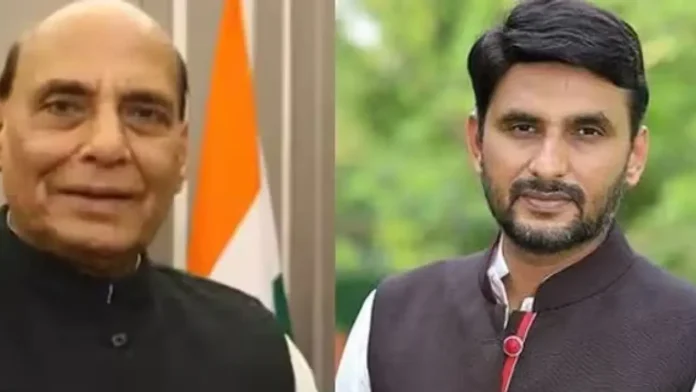
With the Uttar Pradesh Assembly elections drawing closer, the Bharatiya Janata Party (BJP) has unveiled a new state leadership team in a move aimed at strengthening its organisational structure and preparing for the crucial electoral battle. The reshuffle reflects the party’s focus on reinforcing its grassroots network while bringing a mix of experienced leaders and emerging faces into key positions.
One of the most notable appointments is that of Neeraj Singh, son of senior BJP leader and Union Defence Minister Rajnath Singh, who has been named a state vice president. His elevation is being viewed as a significant development within the party’s organisational framework and highlights the BJP’s efforts to promote a new generation of leadership.
BJP Begins Early Poll Preparations
The announcement of the new state executive signals that the BJP has officially stepped up its preparations for the upcoming Assembly elections in Uttar Pradesh. The newly constituted team includes vice presidents, general secretaries, secretaries, regional office-bearers, spokespersons, and other key functionaries who will oversee the party’s organisational and election-related activities across the state.
The objective of the reshuffle is to create a stronger organisational network capable of reaching voters at every level, from village booths to major urban constituencies. By restructuring its leadership well in advance of the elections, the party aims to improve coordination, strengthen communication, and ensure smoother implementation of its political strategy.
Neeraj Singh Gets a Bigger Organisational Role
Among all the appointments, Neeraj Singh’s promotion has attracted considerable political attention. Having remained active in the party’s organisational activities over the years, his appointment as a state vice president marks a major step forward in his political journey.
The move is being interpreted as part of the BJP’s long-term strategy to encourage younger leaders while maintaining continuity through experienced leadership. Political observers believe that assigning important responsibilities to emerging leaders will help the party build a strong leadership pipeline for the future.
Blend of Experience and Fresh Faces
The newly announced team reflects a balance between senior leaders who have extensive organisational experience and younger members who bring fresh energy to the party.
By distributing responsibilities across different regions and organisational levels, the BJP hopes to strengthen its presence throughout Uttar Pradesh. The appointments are expected to improve coordination among district units, regional leaders, and booth-level workers, creating a more effective election machinery.
Focus on Grassroots Organisation
The BJP has consistently emphasized that strong organisational structures play a key role in electoral success. The latest reshuffle appears to be designed with this objective in mind.
Party workers will be expected to intensify outreach programmes, connect with local communities, strengthen booth management, and expand membership activities across the state. A well-organised cadre is likely to play a crucial role in mobilising support during the election campaign.
Youth Leadership Takes Centre Stage
The inclusion of younger leaders in important organisational positions reflects the BJP’s effort to modernise its leadership structure without distancing itself from its experienced leadership base.
Young office-bearers are expected to play an important role in connecting with first-time voters and digitally active audiences. Their participation may also help the party strengthen engagement through social media, community outreach, and youth-focused initiatives.
Strategic Importance of Uttar Pradesh
Uttar Pradesh remains India’s most politically significant state, with the largest representation in Parliament. Success in the state is often seen as a key indicator of a political party’s organisational strength and electoral momentum.
Recognising the importance of the state, the BJP has chosen to begin its organisational preparations well ahead of the election schedule. A strong leadership team is expected to help the party effectively manage campaign planning, voter outreach, and coordination across all districts.
Political Implications
The latest organisational changes suggest that the BJP is focused not only on contesting the next election but also on strengthening its internal structure for the long term. The promotion of younger leaders alongside experienced office-bearers indicates an attempt to create leadership continuity while adapting to changing political dynamics.
The reshuffle also sends a message that organisational preparedness remains one of the party’s top priorities as political activity begins to intensify in Uttar Pradesh.
Conclusion
The BJP’s newly announced Uttar Pradesh leadership team marks an important step in the party’s preparations for the upcoming Assembly elections. The appointment of Neeraj Singh as a state vice president, along with several other organisational changes, reflects the party’s strategy of combining experience with fresh leadership.
As election season approaches, the revamped state unit is expected to play a central role in strengthening the BJP’s grassroots network, expanding voter outreach, and shaping its campaign strategy. The coming months will determine how effectively the new leadership translates organisational strength into electoral success in one of India’s most politically significant states.

