


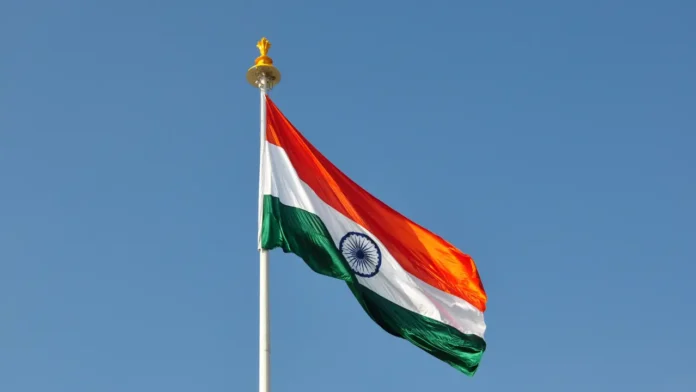
People often use the words unfurling and hoisting as if they mean the same thing. Yet they differ in action, symbolism and occasion.
Hoisting means raising the flag up the mast from a lower point to the top. Unfurling means opening a flag that already sits at or is fixed near the top of the mast. Both display the flag, but they start from different positions and carry different messages.
The ceremonial occasions
India marks Independence Day with flag hoisting. Leaders raise the flag to the peak. India marks Republic Day with the flag unfurling. The head of state opens the flag at the top. Thus, the two acts link to two separate national stories.
The symbolism explained
Hoisting signals achievement and liberation. It celebrates a nation that fought and won freedom. Unfurling signals constitutional authority and continuity. It celebrates a nation that now governs itself under law. Together, the acts trace a transition from gaining freedom to governing it.
Who performs each act and why
Typically, the head of the elected government hoists the flag on Independence Day to honour the movement that won sovereignty.
The head of state unfurls the flag on Republic Day to mark constitutional authority. This distribution reflects constitutional roles and public symbolism.
Practical differences in procedure
For hoisting, teams start with a folded flag at the base. They attach it to the halyard. Then they pull the halyard to raise the flag until it reaches the masthead. For unfurling, organisers keep the flag fixed or tied at the masthead. At the right moment, they release the restraints so the flag opens and spreads. Both procedures need rehearsals, secure fixtures, and clear commands.
Protocol and legal framing
Flag protocol defines respectful handling, dimensions, and display methods. It also defines authorised persons for official ceremonies. Civic codes or national guidelines state when and how flags may fly at half-mast, on special days, or during mourning. Authorities enforce these rules to protect dignity and uniformity.
Common misconceptions
One myth claims unfurling ranks lower than hoisting. That idea lacks basis. Both acts hold equal dignity. Another myth says civilians cannot unfurl; in practice, civic bodies follow the same display rules but designate appropriate officials to perform official acts. People often confuse timing with meaning; remember, the two acts reflect different historical moments.
Contemporary significance
The rituals still shape public memory. They anchor textbooks, speeches, and school ceremonies. They teach civic values. Moreover, they give leaders a public stage to connect history with policy. Thus, the difference matters beyond the technical act.
Quick checklist for organisers
- Choose the correct action for the occasion.
- Use the prescribed flag size and materials.
- Secure the halyard and fittings.
- Rehearse the sequence and commands.
- Follow safety and security checks.
- Respect the flag code for display and disposal.
People feel the flag in more than the rules. They feel it in family stories, school mornings and quiet civic pride. Knowing the difference between unfurling and hoisting helps everyone appreciate those moments more deeply.
Hoisting and unfurling differ in movement, meaning and ceremony. Hoisting raises; unfurling opens. Hoisting connects to independence; unfurling ties to constitutional rule. Both acts deserve respect and clear protocol. If you want, I can now provide: (a) a short explainer for a school assembly, (b) a checklist for an event organiser, or (c) a one-line social post clarifying the difference. Which would you prefer?

