


A civil engineering professor at the University of Sharjah has patented a friction-based seismic damper that works entirely on physics — no sensors, no software, no power grid required
The Problem No One Talks About Enough
When an earthquake strikes, two things tend to happen almost simultaneously. The ground shakes. And the power goes out.
That second part matters enormously. Most modern seismic protection systems — the ones embedded in smart buildings, hospitals, and critical infrastructure — depend on electricity, sensors, and software to do their job. The moment the power cuts out, those systems stop working. Right when they are needed most.
This is not a hypothetical edge case. It is a documented, recurring failure pattern in major seismic events. The 2011 Tōhoku earthquake in Japan, the 2023 Turkey-Syria earthquake, the 1994 Northridge earthquake in California — each one knocked out power grids across large areas, often within the first few seconds of shaking. Every backup system that required electricity became a liability the moment the grid failed.
A civil engineering professor in the United Arab Emirates has spent years thinking about this problem. His answer is surprisingly low-tech. And it just received a United States patent.
The Invention — A Cylinder, Some Steel Balls, and Physics
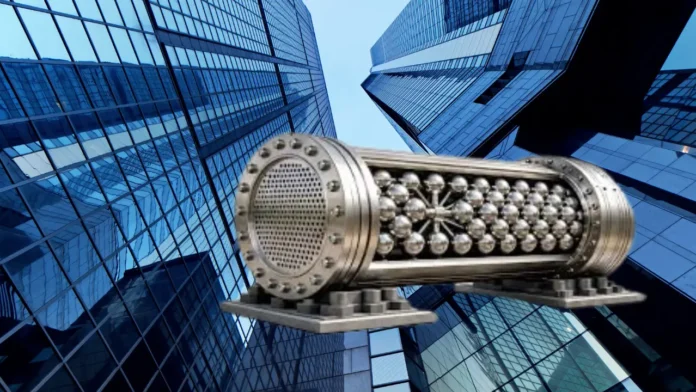
Professor Moussa Leblouba of the University of Sharjah developed a device that looks almost comically simple at first glance. It is a hollow steel cylinder filled with solid steel balls. Running through the centre of the cylinder is a shaft. Attached to that shaft are short rods that extend outward — like the branches of a tree, if the trunk were made of steel and the whole thing lived inside a metal tube.
That is essentially it.
When an earthquake sends vibrations through a structure, the shaft moves back and forth inside the cylinder. As it moves, the rods push against the surrounding steel balls. That creates intense friction. And friction, in physics, is one of the most reliable ways to convert kinetic energy into heat and dissipate it harmlessly.
The structure above and below the device receives significantly less vibration energy as a result. The shaking still happens. But it arrives softer, slower, and weaker by the time it reaches the walls, floors, and load-bearing elements that matter.
The US Patent and Trademark Office granted the patent — listed as US 12,498,014 B2 — in December 2025. The application was originally filed in August 2022, with the design published in 2024 before the final patent grant.
What “14% Damping Ratio” Actually Means
The headline performance figure from early laboratory testing is a damping ratio of approximately 14 percent. That number needs some context to make sense.
Damping ratio, in engineering terms, is a measure of how quickly a vibrating structure returns to rest after being set in motion. A higher damping ratio means the oscillations die down faster. Most standard building materials — concrete, steel frames — have a natural damping ratio of around 2 to 5 percent. Adding a damping device raises that number deliberately.
At 14 percent effective damping, the device meaningfully reduces how long and how intensely a structure continues to vibrate after the initial seismic wave hits. That directly reduces stress on structural connections, cracking at joints, and cumulative fatigue damage — which is what turns a survivable earthquake into a collapsed building.
To be clear, 14 percent is the laboratory figure. Real-world performance in a full-scale structure during a complex earthquake will depend on many additional factors — building mass, foundation type, ground motion frequency, and how the device is installed. But as a starting point, it is a genuinely useful number. Passive dampers with comparable ratios have been deployed in real structures for decades.
Why “No Electricity” Is the Critical Feature
Professor Leblouba designed this device to be entirely passive. No electrical input. No sensors measuring vibration. No software is adjusting the response in real time. No batteries. No backup generators. Nothing that requires power to function.
The device requires zero electrical power to operate. The cylinder, the balls, the shaft, and the rods are all mechanically separable and independently simple. The energy dissipation happens purely through physics — friction converting motion into heat.
This is not a small detail. It is the entire point.
Think about the buildings and structures that matter most during a disaster. Hospitals need to stay standing so they can treat casualties. Communication towers need to remain upright so emergency services can coordinate. Bridges need to stay passable so evacuation routes remain open. Data centres need to survive so that financial and government systems stay functional.
Every single one of these is also a prime candidate for power failure during a major earthquake. A protection system that depends on electricity is, at some level, betting that the one thing an earthquake is most likely to destroy will somehow stay intact. That is a bet you lose a lot.
Leblouba’s device makes no such bet. When the power goes out, the steel balls keep working. When sensors fail, the friction keeps working. When the software crashes, the physics keeps working. That is an entirely different category of reliability.
How It Compares to What Already Exists
Seismic dampers are not new. Engineers have been installing them in buildings and bridges for decades. But existing solutions come with significant drawbacks that limit how widely they get deployed.
Fluid-based dampers use viscous liquid to absorb energy. They work well but risk leakage over time — and leaked fluid means the entire system needs replacement. In earthquake-prone regions with limited maintenance infrastructure, that is a serious problem.
Metal yielding dampers absorb energy by permanently deforming. They work once, effectively. But after a major event, they need complete replacement. The cost of that replacement often means they get skipped in favour of cheaper, less protected alternatives.
Active and semi-active systems use sensors and actuators to dynamically adjust their response. They can be highly effective in controlled conditions. However, they are expensive to install, complex to maintain, and — as discussed — dependent on power that may not exist when they need to work.
Leblouba addressed this comparison directly: “Traditional solutions to this problem, such as fluid-based dampers or deformable metal devices, tend to be expensive, prone to leakage or permanent deformation, and often require complete replacement after a single major event.”
His device sidesteps each of these problems. Steel balls do not leak. Friction-based energy dissipation does not permanently deform the device. And passive operation means no power dependency. The components are also modular and separable, which simplifies maintenance and eventual replacement.
Who Needs This Most
The potential application list is broader than most people would initially expect.
The obvious candidates are buildings and bridges in earthquake-prone regions. The US Geological Survey and FEMA estimate that earthquakes cost the United States roughly $14.7 billion per year in building damage and related losses alone. Globally, the toll is far higher. Japan, Turkey, Nepal, Indonesia, Chile, Iran, and dozens of other nations face recurring seismic risk with varying levels of infrastructure preparedness.
But Leblouba’s device also has relevance far beyond traditional structural engineering. The University of Sharjah’s release lists potential uses in electrical and communications installations, vehicles, aircraft, ships, aerospace systems, and sensitive scientific or military equipment. Any platform that carries sensitive equipment and operates in environments where shock and vibration can cause damage is a potential beneficiary.
There is also a defence and resilience angle. Critical military and civilian infrastructure often share the same ports, bridges, and power corridors. A seismic event that damages shared infrastructure creates cascading failures across both civilian emergency response and national security operations. Passive, electricity-free protection in those shared assets carries obvious value.
Perhaps most importantly, the simplicity of the design makes it relevant for the parts of the world that need earthquake protection the most but can afford it least. A device made from a steel cylinder, a shaft, solid balls, and short rods is manufacturable almost anywhere. It does not require specialised electronics, rare materials, or sophisticated maintenance. For communities in developing regions that sit on major fault lines and operate on tight infrastructure budgets, that difference is not incremental — it is transformative.
The Gap Between Patent and Building Code
A US patent is a meaningful milestone. It formally establishes novelty, establishes intellectual ownership, and opens the door to licensing and commercial development. But it is not the same as a building code approval.
Before this device gets installed in hospitals and highway bridges at scale, it needs to clear additional hurdles. Independent testing by third parties, beyond the lab results published so far, will be essential. Civil engineering regulators in different countries have their own standards for seismic damper certification. Real-world pilot installations — on actual structures, in monitored conditions — will be needed to validate that the 14 percent lab result translates to meaningful protection in field conditions.
There are also practical engineering questions that need answers over time. How does the friction performance change after hundreds of vibration cycles? Does the device wear down in ways that reduce effectiveness? How does it behave in humid, coastal, or corrosive environments where steel can degrade? These are not deal-breakers. Passive mechanical systems have been solving similar challenges for a long time. But they are the real engineering work that lies between a patent filing and widespread deployment.
Leblouba has expressed optimism about the path forward. He anticipates collaboration with civil engineering firms, municipalities, and disaster management agencies. The patent document itself addresses economic feasibility, scalability, and ease of installation — suggesting the inventor is already thinking about the deployment pathway, not just the science.
Earthquake Engineering Meets Climate Policy
There is one more dimension to this invention that rarely gets attention in the initial coverage — the environmental one.
Every building that collapses in an earthquake generates enormous quantities of debris. Rebuilding requires cement, steel, aggregate, and all the carbon-intensive processes that go with them. A building that survives a major earthquake with reduced structural damage does not just save lives and money. It also avoids the material and carbon cost of demolition and reconstruction.
As one analyst put it plainly: fewer cracked walls means fewer emergency rebuilds, less debris hauling, and less demand for carbon-heavy construction materials. At that level, earthquake engineering starts to look a lot like climate policy. The two challenges — making buildings more resilient and making cities more sustainable — share more solutions than is commonly recognised.
A low-cost, passive, electricity-free damper that extends the useful life of existing structures sits neatly in the overlap between those two goals.
What Happens Next
The device has its patent. The lab results are published. The inventor has laid out the use cases clearly. What comes next is the harder, slower work of moving from a brilliant concept to a deployed technology.
That process involves independent verification, regulatory engagement, pilot projects, and the kind of patient collaboration with municipalities and engineering firms that rarely makes headlines. But it is the work that actually determines whether this invention changes anything in the physical world.
Given the scale of the problem it addresses — earthquake risk affects hundreds of millions of people across dozens of countries — even modest progress in deployment carries significant humanitarian value.
A hollow steel cylinder packed with solid balls is not glamorous. But in the middle of a major earthquake, when the lights go out, and the ground will not stop moving, glamour is not what saves buildings. Reliable physics does.

