


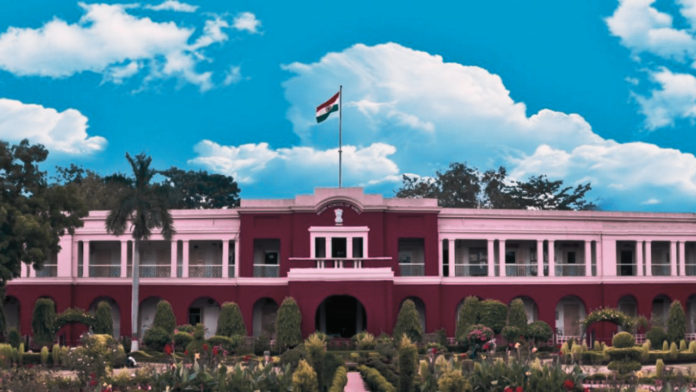
A Five-Member Team from Geology, Geophysics, and Petroleum Engineering Put India on the Global Geoscience Map
Some competitions test textbook knowledge. Then some competitions test whether you can think like a real geoscientist — under pressure, with real data, on a deadline.
The Imperial Barrel Award (IBA) is firmly the second kind.
And at the 2026 Asia Pacific Regional Competition of the AAPG Imperial Barrel Award, Team IIT (ISM) Dhanbad stood second. That is not a small achievement. In a region packed with elite universities from Australia, China, Japan, South Korea, and Southeast Asia, a team from Jharkhand made it to the podium.
Here is the full story — what the competition is, who the team was, what they had to do, and why this institution matters so much to India.
What Is the AAPG Imperial Barrel Award?
The Imperial Barrel Award Programme (IBA) is run by the American Association of Petroleum Geologists (AAPG) and the AAPG Foundation. It is one of the world’s most prestigious geoscience competitions for graduate students.
Every year, university teams from across the globe receive a standardised dataset — real geological and geophysical data from an undisclosed oil and gas basin. The teams must analyse this data, identify the best drilling prospects, and present a complete exploration and field development plan. All of this happens under tight time constraints, just like in an actual oil company.
The competition draws more than 300 university teams from over 80 countries. Each team must demonstrate mastery across geology, geophysics, and petroleum engineering — three disciplines working together, not separately.
Teams first compete regionally — in zones like Asia Pacific, Europe, Latin America, and the Middle East. The regional winners then advance to the global finals at AAPG’s Annual Convention.
Winning the IBA, or even placing in the top two, is considered exceptional. Industry recruiters from companies like ExxonMobil, Shell, Chevron, and TotalEnergies closely watch results. It directly signals the quality of a university’s geoscience programme to the entire global industry.
The IIT (ISM) Dhanbad Team
The team that secured second place in the Asia Pacific region in 2026 brought together five students from three different disciplines — a deliberate choice, and exactly the kind of cross-disciplinary integration the competition demands.
The team consisted of:
- Abhimanyu Sarkar — Applied Geology
- Shubhashish Chakraborty — Applied Geology
- Wrick Ghosh — Applied Geophysics
- Sohan Kar — Applied Geophysics
- Manish Upadhyay — Petroleum Engineering
That combination tells you something important. Winning the IBA is not about one star student. It requires someone who can read the rock record, someone who can interpret seismic data, and someone who understands reservoir behaviour and drilling — all working as one unit under a shared deadline.
What Did They Have to Do?
Like every IBA team, they received a geological dataset from a real-world basin. They had to evaluate the basin’s hydrocarbon potential. That means interpreting seismic sections, identifying structural and stratigraphic traps, estimating resource volumes, and recommending an exploration strategy with economic reasoning behind it.
All of this gets compiled into a technical presentation delivered to a panel of industry judges — working professionals from major oil companies.
The judges do not just look at the answer. They look at the reasoning, the methodology, the teamwork, and the ability to defend decisions under tough questioning. It genuinely simulates what a petroleum geoscience team does in real industry.
Finishing second in the Asia Pacific region, against universities from countries with far larger geoscience industries and longer academic histories in the field, is a result that speaks clearly for itself.
Why IIT (ISM) Dhanbad? Understanding the Institute
This result did not come out of nowhere. IIT (ISM) Dhanbad has one of the deepest geoscience and mining education traditions of any institution in Asia. To understand why this win matters, you need to understand what this institute is and where it came from.
A Century of History
IIT (ISM) Dhanbad was established on 9 December 1926 — almost a hundred years ago. It was founded by the British Indian Government on the model of the Royal School of Mines, London. The McPherson Committee, formed to assess India’s needs in mining education, recommended its creation in 1920. It was formally inaugurated by Lord Irwin, the then Viceroy of India.
It began as the Indian School of Mines & Applied Geology, offering education in mining engineering and applied geology. In 1957, it added Petroleum Engineering and Applied Geophysics — two disciplines that would define its identity for decades to come.
Today, it is the third-oldest institution in India to be elevated to IIT status, after IIT Roorkee and IIT (BHU) Varanasi. In 2016, after a proposal that had been pending since 1994, the Parliament of India passed the Institutes of Technology (Amendment) Bill, formally converting ISM Dhanbad into an IIT. The Presidential assent came on 6 September 2016.
What Makes It Unique Among IITs?
Most IITs are strong across engineering broadly. IIT (ISM) Dhanbad is uniquely strong in earth sciences, energy, and mineral resources.
Its Applied Geology, Applied Geophysics, Petroleum Engineering, and Mining Engineering departments are among the most specialised in the country. They sit in Dhanbad — the heart of India’s coal belt, in a mineral-rich region of Jharkhand — which means students here work close to the industry they study.
The campus covers nearly 445 acres. Students get admitted through JEE Advanced, one of the world’s toughest entrance examinations. Placement packages have reached up to ₹60 lakh per year, with recruiters including Google, Microsoft, Tata Steel, Siemens, and global energy majors.
A Legacy of Padma Awardees
The depth of this institute’s contribution to Indian science and industry shows in its alumni.
Rabi Narayan Bastia, a Padma Shri awardee, is a geoscientist known for landmark contributions to hydrocarbon exploration in the Krishna Godavari Basin. Vijay Prasad Dimri, another Padma Shri recipient, made foundational contributions to earth science and geophysics. Harsh Gupta, yet another Padma Shri awardee, is a celebrated earth scientist and seismologist. And Waman Bapuji Metre, a Padma Bhushan recipient, was a pioneer in India’s oil industry.
These are not just names. They are evidence of a tradition — a place that has consistently produced people who shaped India’s understanding of its own earth.
Research and Innovation Today
The institution today is not resting on history. It actively pursues cutting-edge research across critical minerals, carbon capture and sequestration, AI-powered geoscience modelling, hydrogen technology, and renewable energy.
Researchers from IIT (ISM) have presented work at top international conferences including Goldschmidt, AOGS, and IIT Bombay’s own specialised workshops. Faculty members sit on editorial boards of journals like Scientific Reports published by Springer Nature.
The AAPG Student Chapter at IIT (ISM) Dhanbad — which directly connects students to the global petroleum geoscience community — has been active for years. The IBA result in 2026 is partly a product of that consistent engagement with global industry standards.
Why This Win Matters for India
India is a country with enormous hydrocarbon potential still waiting to be explored. The Krishna Godavari Basin, the Cauvery Basin, deepwater offshore blocks — these require exactly the kind of multidisciplinary geoscience talent that the IBA tests.
When a team from IIT (ISM) Dhanbad finishes second in the Asia Pacific IBA, it tells the world that India’s geoscience talent is not just real — it is competitive at the highest level.
It also matters for the institution itself. For a place celebrating nearly 100 years of existence in 2026, this kind of international recognition affirms that the legacy is alive, not just preserved in history books.
And it matters for the five students personally. Judges at IBA competitions include senior professionals from the world’s largest energy companies. This result will follow Abhimanyu, Shubhashish, Wrick, Sohan, and Manish for the rest of their careers — opening doors that textbook grades alone never could.
IIT (ISM) Dhanbad at a Glance
Established: 9 December 1926
Became an IIT: 6 September 2016
Location: Sardar Patel Nagar, Dhanbad, Jharkhand
Campus size: ~445 acres
Admission: JEE Advanced (undergraduate), GATE (postgraduate)
Key specialisations: Mining Engineering, Petroleum Engineering, Applied Geology, Applied Geophysics, Computer Science, Electrical Engineering
Notable alumni: Rabi Narayan Bastia (Padma Shri), Vijay Prasad Dimri (Padma Shri), Harsh Gupta (Padma Shri), Waman Bapuji Metre (Padma Bhushan)
Highest placement package: ₹60 lakh per annum
Major recruiters: Google, Microsoft, Tata Steel, Siemens, Accenture, global energy companies
AAPG IBA 2026 result: 2nd Place, Asia Pacific Regional Competition
This article is based on official IIT (ISM) Dhanbad communications, institutional records, and verified news reports.

 Dhanbad secured second place at the AAPG Imperial Barrel Award (IBA) 2026 Asia Pacific Regional Competition — one of the world's toughest geoscience contests. Here's the full story and why this institute matters.)