


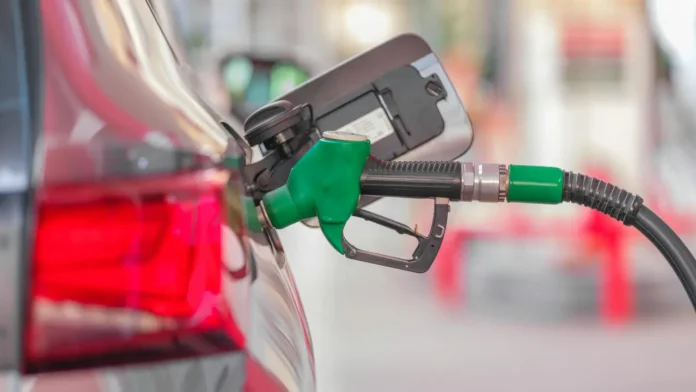
Three Hikes. Ten Days. And a 49-Month Freeze That Nobody Told You About.
On Saturday, May 23, 2026, India woke up to its third fuel price hike in just 10 days. Petrol went up by 87 paise per litre. Diesel climbed by 91 paise. In Kolkata, petrol now costs over ₹110 per litre. In Delhi, it is inching toward ₹100. In Mumbai and other high-tax states, it is already beyond that.
This is not a blip. It is the unwinding of a policy that has been building toward this moment for nearly four years. And to understand why your fuel bill is exploding right now, you need to go back to April 2022 — the last time oil companies changed petrol prices at the pump.
The 49-Month Freeze — And the Political Logic Behind It
For 49 months, India kept fuel prices frozen. Not because global oil became cheap. Not because the economy had solved its energy problem. But because freezing prices before elections is one of the oldest political plays in the book.
State-owned oil marketing companies — Indian Oil, BPCL, and HPCL — control over 90% of India’s fuel retail market. They are technically free to revise prices in line with global crude costs. In practice, they do not revise prices without a nod from the government. And the government tends to go very quiet on that nod whenever elections are approaching.
The pattern is well-established. Prices froze before Uttar Pradesh went to polls. They froze before national elections. They froze through multiple state contests. Meanwhile, crude oil kept getting more expensive. The gap between the price at the pump and the actual cost of the fuel kept growing.
By early 2026, after the West Asia crisis sent crude oil past $100 a barrel again, that gap had become catastrophic. The three companies were bleeding an estimated ₹30,000 crore every single month. That is ₹1,000 crore a day. Fitch Ratings had already warned that their financial defences were becoming “very brittle.” BPCL disclosed publicly that it was losing between ₹25 and ₹30 per litre on every litre of diesel sold. On petrol, the loss was ₹10 to ₹14 per litre.
The freeze could not hold forever. On May 15, 2026, after the BJP secured results in key state assembly elections, it ended. The first hike was ₹3 per litre — the largest single-day revision in nearly four years. Two more followed within 10 days.
What Broke the Dam: The Strait of Hormuz
The political calendar explains the timing. But the West Asia crisis explains the severity.
On March 9, 2026, Iranian forces launched a series of coordinated missile and drone strikes on oil tankers transiting the Persian Gulf. The Strait of Hormuz — a narrow waterway through which nearly 20% of the world’s oil passes every day — effectively shut down to most operators.
The impact on global markets was immediate and brutal. Brent crude jumped 24% in a single session, briefly crossing $120 per barrel. India’s crude import basket, which had averaged around $69 per barrel in February 2026 — just days before the conflict escalated — surged to an average of $113 to $114 per barrel in the months that followed. That is a rise of more than 50% in a matter of weeks.
India imports about 90% of its crude oil needs. It is the world’s third-largest oil consumer. When global prices move, India cannot ignore them for long — no matter how much it would prefer to politically.
Even the partial buffer India had built up — by buying discounted Russian crude, which now accounts for roughly 38% of total imports — could not absorb a shock of this magnitude. Russian oil is cheaper, but its price still moves in broad step with global benchmarks. When the global floor rises sharply, the Russian discount no longer saves you enough.
City by City — What You Are Paying Now
Here is a snapshot of where prices stand after the third hike on May 23, 2026:
Delhi: Petrol at ₹99.51/litre | Diesel at ₹92.49/litre Kolkata: Petrol crossed ₹110/litre Mumbai and other high-VAT states: Substantially higher than Delhi CNG in Delhi: ₹81.09/kg — up ₹1/kg in the same round
Why does Delhi look cheaper than most cities? Because state VAT rates vary dramatically across India — from roughly 15% in lower-tax states to over 35% in states with higher fiscal dependence on fuel revenues. Delhi serves as the national benchmark precisely because it represents the lower end of the spectrum. If you live in Maharashtra, Rajasthan, or parts of eastern India, you are paying significantly more.
This Is Not Just About Fuel. It Is About Everything.
Fuel pricing is never just about what you pay at the pump. In India, nearly 65% of all freight moves by road. When diesel becomes more expensive, the cost of moving goods goes up. And when the cost of moving goods goes up, the price of everything else follows.
Vegetables. Milk. Groceries. Medicines. School supplies. All of them get transported by diesel-powered trucks. All of them will cost more in the coming weeks as the fuel price increase works its way through the supply chain.
For daily commuters, the squeeze is more direct. Auto-rickshaw unions and cab operators are already pushing for fare revisions. App-based platforms like Uber and Ola will likely adjust dynamic pricing. School van operators are expected to revise monthly charges. Middle-class households in Delhi-NCR alone could see their monthly transport spend rise by ₹300 to ₹800, depending on how far they commute and what vehicle they use.
The RBI has previously estimated that a 10% rise in oil prices adds about 30 basis points to inflation and shaves around 15 basis points off GDP growth. The price increases since the freeze ended have already exceeded that threshold by a wide margin. Congress leader Jairam Ramesh warned that inflation could approach 6% this financial year. ICRA has already cut India’s GDP growth forecast from 6.5% to 6.2%, citing global headwinds — of which the oil shock is the largest.
The people feeling it hardest are not difficult to find. An auto driver in Delhi explained it plainly: “My fuel bill has gone up. My fares haven’t. I am the one taking the hit.” A petrol pump attendant in Mumbai put it even more bluntly: “The rich won’t notice. For us, this is the difference between saving something at the end of the month and saving nothing.”
Why Did the Oil Companies Not Pass This On Earlier?
This is a fair question — and the answer is uncomfortable.
India’s oil marketing companies had, in theory, the legal freedom to revise prices regularly ever since fuel pricing was deregulated starting in 2010. But “deregulated” in India has always had an asterisk. The companies are state-owned. The government is their controlling shareholder. And successive governments — across party lines — have found ways to keep prices frozen when it suited them politically, while the companies quietly bled.
The current situation is a textbook repeat of the pattern. When crude was cheap in 2023 and 2024, the OMCs recovered some of their losses. The government did not cut prices — it let the companies rebuild their balance sheets. Then the West Asia crisis hit. Crude surged. And the companies had to absorb 11 weeks of losses before the government finally allowed the first revision in May 2026 — after state election results had come in.
The BJP won two of the four key contested states before the pricing correction was allowed. The sequencing is not a coincidence. It is the pattern.
Are More Hikes Coming?
Almost certainly — yes.
BPCL’s own disclosures confirm that even at current pump prices, the company is still losing money on diesel. The gap between the actual cost of the fuel and what consumers pay has narrowed significantly, but it has not closed. If global crude prices hold at current levels — or rise further, as the Hormuz situation remains unresolved — further hikes are a matter of when, not if.
Analysts suggest the cumulative hike needed to fully recover OMC losses could reach ₹8 to ₹10 per litre on diesel alone. The government will try to phase this in gradually to manage the public anger. But if the West Asia crisis deepens and global crude pushes toward $130 or $150 per barrel — both of which analysts have flagged as possibilities — the pressure to move faster will be enormous.
The Rubio-India talks this week have energy high on the agenda precisely because of this. Washington wants to sell India more American oil and gas. The US also floated Venezuelan crude as an alternative supply channel. India is listening — because diversifying away from the Hormuz-exposed Middle East routes has become a strategic necessity, not just an economic one.
What Can the Government Actually Do?
The government has two main levers. It can cut central excise duty on fuel — which currently forms a significant share of the retail price — to absorb some of the global price shock and protect consumers. It did this in May 2022. But that move cost the treasury tens of thousands of crores. With fiscal pressures already elevated, another round of excise cuts is a difficult call.
The second lever is faster diversification of oil supply — more American LNG, more alternative crude routes, faster progress on domestic renewable energy. These are longer-term solutions. They do not help the auto driver in Delhi this week.
The Bottom Line
India’s fuel price crisis in May 2026 has three causes stacked on top of each other. First, a 49-month freeze that kept prices artificially suppressed while the real cost of fuel kept rising. Second, the West Asia war and the Strait of Hormuz closure, which sent global crude up by more than 50% in months. Third, a political system that uses fuel prices as an electoral cushion — and then asks ordinary citizens to pay the deferred bill once the votes are counted.
The man filling his two-wheeler in Kolkata and paying ₹110 per litre did not cause any of these problems. But he is paying for all of them.
And if you think three hikes in 10 days is the end of this story, keep watching the pump.

