


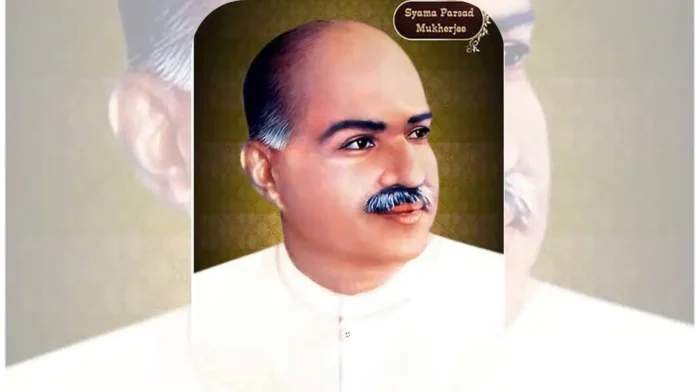
New Delhi: Every year on July 6, India commemorates the birth anniversary of Dr. Syama Prasad Mukherjee, an eminent educationist, lawyer, parliamentarian, and the founder of the Bharatiya Jana Sangh. Born in Kolkata in 1901, Mukherjee played a significant role in shaping independent India’s political and educational landscape.
Known for his strong views on national integration and constitutional unity, Mukherjee’s life continues to inspire discussions across political and academic circles. On his birth anniversary, here are some interesting facts that highlight his remarkable journey.
1. He Became the Youngest Vice-Chancellor of the University of Calcutta
At just 33 years of age, Syama Prasad Mukherjee became the Vice-Chancellor of the University of Calcutta. During his tenure, he introduced several educational reforms and encouraged the growth of higher education in India.
2. He Came From a Distinguished Family
Mukherjee was the son of Sir Ashutosh Mukherjee, one of India’s most respected jurists and educationists, often remembered as the “Tiger of Bengal.” His father’s legacy had a profound influence on his academic and public life.
3. A Brilliant Scholar
An exceptional student, Mukherjee earned degrees in English, Bengali, and Law before qualifying as a barrister in England. His academic achievements made him one of the most respected intellectuals of his generation.
4. Independent India’s First Industries Minister
After India gained independence in 1947, Mukherjee joined the first Union Cabinet led by Prime Minister Jawaharlal Nehru as the Minister for Industry and Supply. He contributed to laying the foundation of India’s industrial development during its formative years.
5. Founder of the Bharatiya Jana Sangh
In 1951, Mukherjee established the Bharatiya Jana Sangh, a political party that later evolved into the Bharatiya Janata Party (BJP), now one of India’s leading political parties.
6. Advocate of National Integration
Mukherjee strongly believed that India should have one Constitution, one national flag, and one head of state. His slogan, “Ek Vidhan, Ek Nishan, Ek Pradhan,” became synonymous with his campaign for complete integration of Jammu and Kashmir with the rest of India.
7. Protest Against the Jammu and Kashmir Permit System
In 1953, Mukherjee entered Jammu and Kashmir without obtaining the mandatory permit that was then required for Indian citizens. His action was intended as a protest against the special administrative arrangements that existed at the time.
8. Arrest and Untimely Death
Following his arrest in Jammu and Kashmir, Mukherjee died in custody on June 23, 1953. His death has remained a subject of public discussion and political debate for decades.
9. Member of the Constituent Assembly
Mukherjee also served in India’s Constituent Assembly, contributing to discussions that helped shape the Constitution of independent India.
10. Champion of Indian Languages
As Vice-Chancellor, he promoted the use of Indian languages in higher education while encouraging research and academic excellence across disciplines.
11. A Life Dedicated to Public Service
After the death of his wife at a young age, Mukherjee chose not to remarry and devoted himself to education, public life, and national service while raising his children.
12. His Legacy Lives On
More than seven decades after his passing, Syama Prasad Mukherjee continues to be remembered as an influential educationist, parliamentarian, and political leader. Universities, institutions, roads, and public projects across India bear his name, reflecting his lasting contribution to the nation.
Why Syama Prasad Mukherjee Still Matters
Dr. Syama Prasad Mukherjee’s contributions extend beyond politics. His work in education, industrial policy, and public administration continues to influence discussions on nation-building. While opinions on some of his political positions differ, his impact on India’s post-independence history remains significant.
As India observes his birth anniversary in 2026, his life serves as a reminder of the role visionary leadership can play in shaping a nation’s future.

