


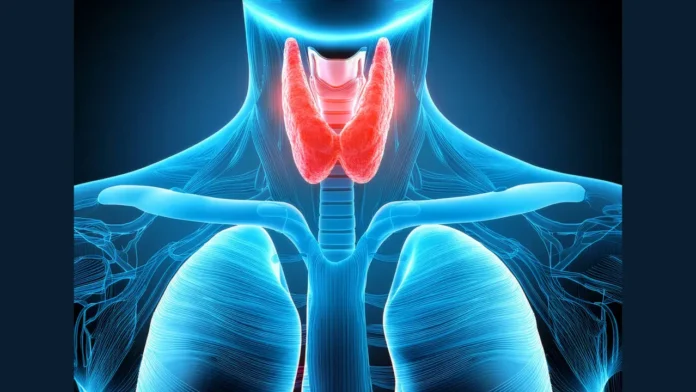
Today, on May 25, the world pauses to recognise a butterfly-shaped gland smaller than your thumb — and the 200 million people it affects globally.
200M+ People affected by thyroid disorders globally
4.2Cr Indians living with thyroid disease
68% Of thyroid patients are women
1965 was the year the European Thyroid Association was founded
Every year on May 25, the world observes World Thyroid Day — a global health initiative that shines a light on one of the most underdiagnosed and misunderstood organs in the human body. Despite being no bigger than a walnut, the thyroid gland orchestrates virtually every system in your body, from your heartbeat and metabolism to your mood, memory, and fertility.
This year’s theme — Thyroid and Nutrition — draws attention to the powerful connection between what we eat and how our thyroid functions. In a country like India, where iodine deficiency remains a silent epidemic in many regions, this theme could not be more timely.
What Is the Thyroid Gland?
Tucked just below the Adam’s apple at the front of your neck, the thyroid is a butterfly-shaped endocrine gland that produces two key hormones — thyroxine (T4) and triiodothyronine (T3). These hormones travel through the bloodstream and regulate the metabolic activity of virtually every cell in the body.
Think of the thyroid as your body’s thermostat. When it works correctly, your energy, weight, temperature, heart rate, and brain function all stay in balance. When it misfires — producing too much or too little hormone — the ripple effects are felt everywhere, often in ways that are subtle and easy to dismiss.
“Your thyroid is a small, butterfly-shaped gland that sits at the front of your neck. This gland secretes hormones responsible for regulating thyroxine and triiodothyronine levels in the body.” — Dr Smita Hiras Sudke, Regional Chief of Lab, Metropolis Healthcare Ltd
A Brief History of World Thyroid Day
World Thyroid Day was formally established in September 2007 at the annual general meeting of the Thyroid Federation International. The date May 25 was chosen deliberately — it marks the anniversary of the founding of the European Thyroid Association (ETA) on May 25, 1965. The first World Thyroid Day was officially observed in 2008. In 2010, the American Thyroid Association (ATA) lent its support, followed by organisations like the Chinese Society of Nuclear Medicine and the Asia and Oceania Thyroid Association, making it a truly global event.
Common Thyroid Disorders You Must Know
Thyroid diseases span a wide spectrum. The five most significant ones, especially in the Indian context, are hypothyroidism, hyperthyroidism, goitre, Hashimoto’s thyroiditis, and thyroid cancer.
Hypothyroidism
- Unexplained weight gain
- Fatigue & sluggishness
- Hair thinning & dry skin
- Brain fog & depression
- Feeling cold constantly
- Constipation
Hyperthyroidism
- Sudden weight loss
- Rapid or irregular heartbeat
- Hand tremors
- Anxiety & irritability
- Excessive sweating
- Difficulty sleeping
A critical but often overlooked condition is Hashimoto’s thyroiditis — an autoimmune disorder where the immune system mistakenly attacks the thyroid gland. Many patients remain asymptomatic for years. Goitre, caused by iodine deficiency, causes visible swelling in the neck and remains one of the most visible signs of thyroid dysfunction, particularly in hilly and coastal regions of India.
The India Story: 4.2 Crore Patients and Counting
India carries a disproportionately large burden of thyroid disease. Studies estimate that approximately 42 million Indians suffer from thyroid disorders — yet the vast majority remain undiagnosed, often for years. Iodine deficiency continues to be a serious driver, especially in regions where iodised salt is not consistently used. Hypothyroidism is the most common form, and women — particularly those in the 18 to 35 age group — are significantly more vulnerable, accounting for nearly 68% of all diagnosed cases.
India Alert
Congenital hypothyroidism — a thyroid deficiency present at birth — occurs in 1 out of every 2,640 neonates in India. If left undetected, it can cause irreversible brain damage. Early newborn screening is critical, yet remains inconsistent across states.
2026 Theme: Thyroid and Nutrition
This year’s theme, declared by the Thyroid Federation International, spotlights the critical role nutrition plays in thyroid health. The thyroid cannot function without the right nutrients. Here are the key ones to know:
Iodine Essential for T3 & T4 production
Selenium protects the thyroid from oxidative stress
Zinc supports hormone synthesis
Vitamin D Linked to autoimmune thyroid risk
Iron is needed for thyroid enzyme function
On the flip side, excessive consumption of raw cruciferous vegetables like cabbage and broccoli, or soy products, can interfere with iodine absorption in people who are already iodine-deficient. This is not a reason to avoid them — but it is a reason to ensure adequate iodine intake through iodised salt and a balanced diet.
What Tests Detect a Thyroid Problem?
Diagnosing thyroid disorders is relatively simple and affordable. The standard blood tests include:
Thyroid Panel Tests
TSH (Thyroid Stimulating Hormone) — The first-line screening test. High TSH indicates hypothyroidism; low TSH indicates hyperthyroidism.
Free T3 and Free T4 — Measure actual hormone levels in the blood. Used alongside TSH for complete assessment.
Anti-TPO Antibodies — Detects autoimmune thyroid conditions like Hashimoto’s.
Thyroid Ultrasound — Used to detect nodules, goitre, or structural abnormalities in the gland.
5 Things You Can Do Today
- Get tested — A simple TSH blood test can reveal thyroid dysfunction. If you’re a woman above 25 or have a family history, make it part of your annual health check.
- Use iodised salt — This single habit prevents the most common cause of thyroid disorders in India. Check the label of your salt — it should say “iodised.”
- Spread awareness — Share this article, use #WorldThyroidDay and #ThyroidAndNutrition on social media. Many people miss symptoms for years simply because they didn’t know what to look for.
- Wear purple — Purple is the official colour of thyroid awareness. Wearing it today sparks conversations that can save lives.
- Don’t self-medicate — Thyroid disorders are highly treatable, but a doctor must prescribe the correct dosage of medication like levothyroxine. Never adjust dosage on your own.
Wear Purple Today
Purple is the global colour of thyroid awareness. Show solidarity with the 200 million people living with thyroid disorders worldwide.
The Good News: It Is Highly Treatable
Here is the most important thing to understand about thyroid disorders: they are among the most manageable chronic conditions in medicine. A patient with hypothyroidism on the correct dose of levothyroxine can live a completely normal life. Hyperthyroidism can be controlled with medication, radioactive iodine therapy, or surgery, depending on the cause. The challenge is not treatment — it is the long, painful delay between symptom onset and the first thyroid test. World Thyroid Day exists to close that gap.

