


The US Relationship with India Has Been Bruised. Now, America Is Trying to Fix It.
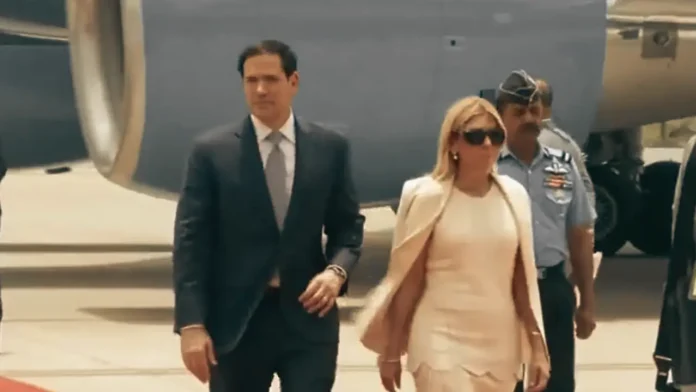
Marco Rubio landed in Kolkata on Saturday, May 23, 2026. It is his first trip to India since becoming the US Secretary of State. The visit spans four days and covers Kolkata, Agra, Jaipur, and New Delhi.
On the surface, it looks like a diplomatic tour. But look closer, and you see something more urgent: America is in repair mode.
The relationship between Washington and New Delhi has taken a serious hit over the past year. Rubio is here to pick up the pieces — and the agenda is far from symbolic.
How Did US-India Relations Get This Bad?
The Tariff Shock
Things began to unravel when the Trump administration slapped a 50% import tariff on Indian goods. That included an extra 25% penalty specifically because India kept buying Russian oil — something Washington had sanctioned heavily.
No similar penalty was applied to China, which was buying just as much Russian oil. India noticed that inconsistency. It stung.
Those tariffs threatened real economic damage. They put jobs at risk. They wiped out nearly a full percentage point of India’s projected GDP growth. Key export sectors — textiles, footwear, gems — felt the squeeze immediately.
A tentative trade deal was later announced, which would have brought the tariff rate down to 18%. However, the US Supreme Court struck down the legal authority used to impose those tariffs. So the situation remains unresolved.
The Pakistan Problem
Meanwhile, Trump grew visibly close to Pakistan, India’s arch-rival. He praised Pakistan’s military leadership publicly. He even hosted Pakistan’s army chief at the White House, a move India reportedly viewed as deeply insulting.
Then came the Pahalgam attack. In April 2025, gunmen killed 26 tourists in Indian-administered Kashmir. India blamed Pakistan. The two countries exchanged military strikes. A ceasefire followed.
Trump then claimed credit for brokering that ceasefire. India rejected that claim outright. The public contradiction left a sour taste in New Delhi.
The Russian Oil Dispute
India has long bought Russian oil. It is affordable and reliable. Washington disapproves — especially since Russia’s war in Ukraine made that trade politically explosive.
Trump publicly stated that India had promised to stop buying Russian oil entirely. New Delhi never confirmed that. The gap between what Trump said and what India actually agreed to created tension that has not been fully resolved.
All of this, taken together, pushed the relationship to what the New York Times described as a “low point” by August 2025.
So, Why Is Rubio Here Now?
To Attend the Quad Foreign Ministers’ Meeting
The most concrete reason for Rubio’s visit is the Quad. On May 26, foreign ministers from the United States, India, Japan, and Australia will sit together in New Delhi.
The Quad — the Quadrilateral Security Dialogue — is essentially a strategic alliance designed to counter China’s growing influence in the Indo-Pacific region. It has been called the “Asian version of NATO.” The four countries conduct joint military and naval exercises across the region.
This meeting matters. A planned leaders’ summit was cancelled earlier, raising questions about America’s commitment to the grouping. Rubio’s showing up signals that Washington still takes it seriously.
To Meet Modi and Jaishankar
Beyond the Quad, Rubio is meeting Prime Minister Narendra Modi directly. He is also sitting down with External Affairs Minister S. Jaishankar for wide-ranging bilateral talks.
The agenda covers trade, technology, defence cooperation, energy security, and emerging technologies. That is almost every dimension of the relationship, which tells you how much ground needs to be covered.
To Rebuild Trust
Rubio himself said it plainly before boarding: “There’s a lot to work on with India. They’re a great ally and partner. We do a lot of good work with them. So this is an important trip.”
That is not the language of routine diplomacy. That is someone acknowledging that work needs to be done.
What Is Actually on the Table?
Energy — The Biggest Lever
Energy is the centrepiece of this visit. The Strait of Hormuz crisis has disrupted global fuel supplies. Inflation is rising across energy-dependent economies. India is one of them.
Washington sees an opening. Rubio has stated openly that the US wants to sell India “as much energy as it is willing to purchase.” That is a significant commitment.
Beyond American oil and gas, Rubio has also pointed to Venezuela as a new source of supply. The interim Venezuelan president is expected to visit India soon to discuss oil arrangements. That is a remarkable diplomatic triangle — and America appears to be helping facilitate it.
Civil nuclear energy is also emerging as a key pillar. A high-level delegation from the US Nuclear Energy Institute met with Maharashtra’s Chief Minister ahead of Rubio’s arrival, as part of a formal US Nuclear Executive Mission to India. Nuclear power could become one of the most consequential parts of this bilateral relationship going forward.
Trade — A Deal That May Come Soon
The US Ambassador to India, Sergio Gor, is confident. He says an interim Bilateral Trade Agreement could be finalised within “weeks or months.” Indian companies have already committed more than $20 billion in investments in the United States. That is real money on the table.
For India, a trade deal matters enormously. The tariff uncertainty has been damaging. A stable framework would give Indian exporters the confidence they need.
Defence and Technology
Defence cooperation and advanced technology are also high on the list. The two countries already have substantial defence ties, but there is room to deepen them — especially as both nations eye China’s military build-up in the Indo-Pacific.
Critical minerals are another area of focus. Both countries have previously reviewed cooperation in this space, and the Quad framework provides an ideal structure for expanding it.
India’s Unique Strategic Position
Here is something that does not get enough attention: India is one of the very few countries in the world that has strong ties with both Israel and Iran simultaneously. That is genuinely rare.
With the ongoing US-Israel conflict involving Iran sending shockwaves through the region, India’s ability to talk to both sides gives it unusual leverage. If tensions continue to escalate, India could potentially play a meaningful role in defusing them.
For Washington, that makes India even more valuable. Traditional European alliances are under strain. America needs partners it can count on. India — with 1.4 billion people, a growing economy, and a unique diplomatic footprint — is exactly that kind of partner.
The Adani Factor
There is also a subplot that has not gone unnoticed.
Just days before Rubio’s arrival, the Trump administration dropped US criminal fraud charges against Indian billionaire Gautam Adani. He had been accused of bribing Indian officials and misleading US investors to secure solar energy contracts. His company has consistently denied the allegations.
The charges were dropped after Adani pledged a $10 billion investment in the United States.
The timing is striking. Whether it was deliberate diplomatic signalling or coincidence, observers on both sides noticed.
Can Rubio Actually Fix Things?
Analysts are cautiously optimistic — but realistic. One visit alone will not erase months of friction. Restoring the earlier closeness between Washington and New Delhi will require sustained, consistent engagement from both sides.
The foundations of the relationship, however, remain solid. Both countries share democratic values. Both are deeply concerned about China’s rise. Both have enormous economic complementarity. Those things do not disappear because of tariff disputes or political misunderstandings.
What Rubio needs to do is demonstrate that Washington understands India’s concerns — and is willing to treat India as an equal partner, not just a lever to be pulled when convenient.
That is ultimately what has frustrated New Delhi most. Not any single policy decision, but the feeling of being taken for granted.
The Bottom Line
Marco Rubio’s India visit is the most significant diplomatic engagement between Washington and New Delhi in over a year. It comes at a time of genuine strain — tariffs, the Pakistan factor, the Russian oil dispute, and Trump’s contested claims about the India-Pakistan ceasefire.
But it also comes at a time of real opportunity. Energy deals, a potential trade agreement, a Quad summit, and civil nuclear cooperation all give both sides something concrete to work toward.
India and the United States need each other. The question Rubio must answer — not just with words, but with commitments — is whether America is ready to prove it.

