


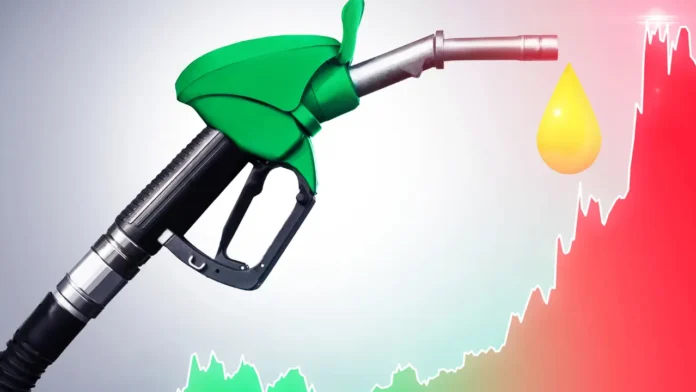
For the fourth time in less than two weeks, state-run oil marketing companies hiked the retail price of petrol and diesel today — delivering the largest single-day increase of the current cycle. Petrol rose by ₹2.61 per litre and diesel by ₹2.71 per litre, sending fuel prices to their highest level in years and reigniting a nationwide debate on inflation, household budgets, and the government’s energy pricing policy.
The cumulative increase across four revisions since May 15, 2026, now stands at approximately ₹7.50 per litre for both petrol and diesel. This is not a gradual drift — it is the sharpest fuel price escalation India has witnessed in nearly four years, compressed into just ten days.
The 10-Day Timeline: Hike by Hike
Chronology of Price Revisions — May 15 to May 25, 2026
May 15 — ₹3.00/litre
Oil companies raised fuel prices by ₹3 per litre — the first major revision in nearly four years, ending a 76-day price freeze during which OMCs absorbed enormous losses.
May 19 — ₹0.90/litre
A 90 paise per litre increase followed just four days later as crude prices remained elevated. No relief for consumers.
May 23 — ₹0.87–0.91/litre
An 87–91 paise increase on May 23 kept the pressure mounting, with no sign of the government intervening to cushion consumers.
May 25 — ₹2.61–2.71/litre (Biggest Single Revision)
The fourth revision was the most significant in size, with petrol rising by ₹2.61 per litre and diesel by ₹2.71 per litre in a single adjustment. Inflation fears spike.
Current Prices Across Major Cities
Prices vary across cities due to differing state VAT rates, local cess levies, and transportation costs. Here is where things stand today:
| City | Petrol (₹/litre) | Diesel (₹/litre) | Change |
|---|---|---|---|
| Delhi | ₹102.12 | ₹95.20 | +₹7.50 |
| Mumbai | ₹111.21 | ₹97.83 | +₹7.50 |
| Kolkata | ₹113.51 | ₹99.82 | +₹7.50 |
| Chennai | ₹107.77 | ₹99.55 | +₹7.50 |
Why Did This Happen? The Four Drivers
The increases reflect the combined impact of elevated global crude oil prices driven by conflict-related disruption in West Asia, months of shipping blockades affecting the Strait of Hormuz, a weakening Indian rupee, and the end of a 76-day price freeze during which Oil Marketing Companies (OMCs) were absorbing losses estimated at approximately ₹1,000 crore per day.
West Asia Conflict
Geopolitical disruption in the region pushed global crude above $107/barrel, forcing a pricing reckoning in India.
Hormuz Blockades
Months of shipping disruptions through the Strait of Hormuz tightened global oil supply chains significantly.
Weakening Rupee
A depreciating rupee against the dollar raised India’s crude import bill further, compounding OMC losses.
76-Day Freeze
OMCs held prices artificially stable for 76 days at an estimated daily loss of ₹1,000 crore, creating enormous pent-up pressure.
Who Controls India’s Fuel Prices?
State-owned Indian Oil Corporation (IOC), Bharat Petroleum Corporation Ltd (BPCL) and Hindustan Petroleum Corporation Ltd (HPCL) together control 90 per cent of India’s fuel market. These three OMCs set retail selling prices based on international crude benchmarks, refining margins, and the rupee-dollar exchange rate.
India operates a dynamic daily pricing framework under which OMCs are meant to adjust retail prices daily based on global crude benchmarks, refining margins, and rupee exchange rates. This pattern explains the acceleration seen in May 2026: four revisions in under two weeks reflect a catch-up phase, not a new trend in daily pricing behaviour.
How Retail Fuel Prices Are Built
The pump price you pay is constructed in layers:
OMC Base Price (crude cost + refining margin)
+ Central Excise Duty (uniform across India)
+ State VAT / Sales Tax (varies by state — this is why Mumbai costs more than Delhi)
+ Dealer Commission
+ Local Cess / Surcharges
When OMCs raise the base price by ₹2.61 per litre, the absolute rupee impact on consumers in high-VAT states is proportionally larger, because the VAT percentage is applied to a higher final price.
What Does This Mean for You?
Rising diesel prices may affect transportation, grocery costs, and delivery charges nationwide. Diesel is the backbone of India’s logistics economy — trucks, tractors, delivery vans, buses, and generators all run on it. When diesel costs more, so does everything that moves.
Freight & Logistics
Trucking costs rise immediately — expect goods prices to follow within days to weeks.
Food & Vegetables
Higher diesel costs mean higher cold-chain and farm-to-market transport costs, pushing up food inflation.
Auto & Cab Fares
Auto-rickshaws and ride-hailing platforms typically revise fares within days of a fuel hike.
Manufacturing
Industrial consumers and generator-dependent businesses face higher operating costs, squeezing margins.
OMC Stocks React
Shares of oil marketing companies (OMCs) will be in focus today, as petrol and diesel prices have been raised by ₹2.61–2.71 per litre. With the latest revision, the cumulative increases have nearly touched ₹7.50 per litre since fuel price revisions resumed on May 15 amid a fuel crisis due to tensions in the Middle East. Higher retail prices improve OMC margins, which had been severely eroded during the 76-day freeze.
What Happens Next?
The critical question for consumers is whether a fifth revision is coming. Global crude prices remain elevated, and the rupee shows no strong recovery signal. However, analysts suggest the most aggressive “catch-up” phase may be over with today’s revision — the bulk of the backlog losses have now been passed on.

