


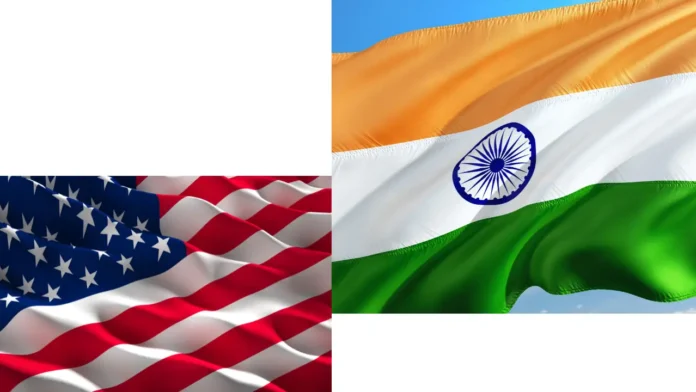
The recent visit of Marco Rubio to India has sparked fresh conversations about the changing perception of the United States among ordinary Indians. While official meetings focused on strategic cooperation, trade, and regional security, the public mood on the streets told a more complicated story.
Political observers, students, social media users, and foreign policy analysts noted that America no longer enjoys the same emotional goodwill among many Indians that it once did. Rubio’s visit highlighted a growing gap between government-level partnerships and public sentiment.
India-US Relations Remain Strong at the Top
On paper, relations between India and the United States remain stronger than ever. The two countries continue to cooperate in areas such as defence, technology, semiconductors, clean energy, artificial intelligence, and Indo-Pacific security.
Washington sees India as a key strategic partner in balancing China’s growing influence in Asia. India, meanwhile, benefits from American investment, technology access, educational opportunities, and defence partnerships.
However, strong diplomatic ties do not always guarantee public enthusiasm.
Why Public Sentiment Has Shifted
Over the past few years, several global developments have changed how many Indians view the United States.
Perception of Double Standards
One major reason is the growing belief that Washington applies different standards to different countries. Many Indians feel that America speaks about democracy, human rights, and sovereignty selectively depending on geopolitical interests.
This perception has become stronger after conflicts in regions such as the Middle East and Europe, where many Indians believe Western countries have taken inconsistent positions.
Rise of Indian National Confidence
India’s rising economic and geopolitical influence has also changed public attitudes. A younger and more confident generation increasingly views India as an independent global power rather than a country that needs Western approval.
This shift has reduced the emotional appeal that America once held for many Indians during the post-liberalisation era of the 1990s and early 2000s.
Social Media and Information Wars
Social media platforms have dramatically reshaped political narratives. Anti-Western narratives, criticism of US foreign policy, and debates around global conflicts spread rapidly online.
As a result, public opinion is now influenced less by traditional diplomacy and more by digital narratives, influencers, independent commentators, and nationalist discourse.
Rubio’s Visit Came at a Sensitive Time
Marco Rubio’s visit took place during a period of increasing geopolitical uncertainty. Conflicts in Europe, tensions in the Indo-Pacific, and global economic pressures have all intensified debates about international alliances.
Many Indians now prefer a foreign policy based on strategic independence rather than alignment with any single global bloc. This explains why sections of Indian public opinion remain cautious even while supporting stronger economic ties with America.
The Difference Between Diplomacy and Public Emotion
One of the biggest takeaways from Rubio’s visit is that state-to-state relations and people-to-people sentiment are no longer moving in the same direction.
Indian policymakers may continue to work closely with Washington on strategic matters, but ordinary citizens are increasingly evaluating global powers through the lens of national interest, historical memory, and online political discourse.
For America, this represents a major challenge. Winning official partnerships is easier than maintaining public trust in a country as large, diverse, and politically aware as India.
Why India Matters to America
India is not just another diplomatic partner for the United States. It is one of the world’s fastest-growing major economies, a technological hub, and a crucial player in Asian geopolitics.
American companies continue to invest heavily in India, while thousands of Indian students and professionals contribute to the US economy every year.
At the same time, India’s strategic importance means Washington cannot afford a decline in public goodwill among ordinary Indians.
Can America Rebuild Its Image?
Experts believe America still holds significant soft power advantages in India through education, innovation, entertainment, technology, and business opportunities.
However, rebuilding emotional trust may require a more balanced foreign policy approach, deeper cultural engagement, and greater sensitivity toward Indian strategic concerns.
Many analysts argue that future US leaders will need to communicate with Indian citizens not just through diplomacy, but through consistency, respect, and long-term engagement.
A Defining Moment in India-US Relations
Marco Rubio’s India visit may not change official policy overnight, but it has exposed an important reality: modern geopolitics is no longer shaped only by governments.
Public opinion matters more than ever.
And in today’s India, the American image is facing one of its most complex tests in decades.

