


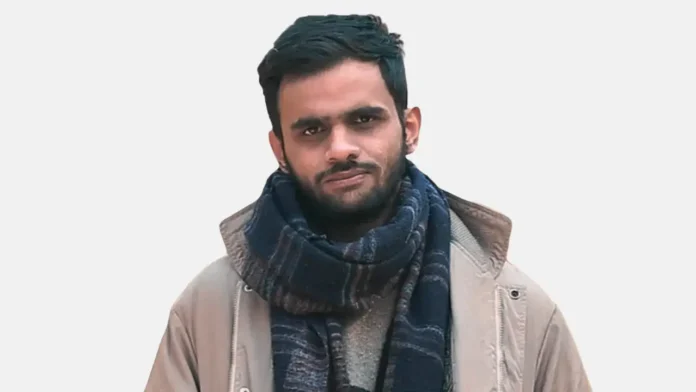
Political activist and former Jawaharlal Nehru University (JNU) research scholar Umar Khalid has released a new book titled Fractured Communities: Adivasi Histories and Politics of Power, offering a fresh perspective on the political history of India’s Adivasi communities. Based on his doctoral research, the book focuses on the Ho community of Jharkhand’s Singhbhum region and seeks to challenge conventional narratives surrounding Indigenous history.
The publication has generated interest in academic and public circles for its detailed examination of how Adivasi communities participated in shaping their own political and social institutions over centuries.
Rethinking Indigenous History
The book argues that Adivasi societies should not be viewed as isolated or unchanged throughout history. Instead, it presents them as active participants who adapted to changing political conditions, negotiated with different governing powers, and developed their own systems of leadership and governance.
By shifting the focus from external narratives to the experiences of Indigenous communities themselves, the work attempts to provide a more comprehensive understanding of Adivasi history in India.
Understanding Colonial-Era Transformations
A significant part of the book examines how colonial administration influenced traditional governance systems in tribal regions. It explores the relationship between local leadership structures and British authorities, highlighting the ways in which governance evolved through negotiation, adaptation, and political change.
Rather than portraying colonial rule as a one-sided process, the study discusses the complex interactions between administrators and local communities that shaped regional politics.
Land and Forest Rights at the Centre
The book also places considerable emphasis on land ownership, forest resources, and community rights. It argues that many historical struggles involving Adivasi communities were rooted in efforts to protect their traditional rights over natural resources.
These issues continue to remain relevant today as debates over land acquisition, environmental conservation, and tribal welfare remain central to public policy and development discussions.
Contribution to Historical Research
Drawing from archival documents, historical records, and regional studies, Fractured Communities seeks to broaden the understanding of Indigenous political history in India. It presents Adivasi communities as decision-makers and political actors who played an important role in shaping local governance instead of being passive observers of historical events.
The work contributes to ongoing academic discussions about tribal identity, state formation, and the evolution of political institutions in eastern India.
Publication Amid Ongoing Public Attention
The release of the book has attracted additional attention because of Umar Khalid’s continued legal proceedings in connection with the 2020 Delhi riots case. While the legal matter remains before the courts, the publication has sparked discussions focused on its academic content and the historical questions it raises.
Supporters view the book as a meaningful contribution to scholarship on Adivasi history, while others see it as an opportunity to revisit long-standing debates on Indigenous identity, governance, and political representation.
Renewed Focus on Adivasi Politics
With Fractured Communities, discussions surrounding Adivasi political agency, historical representation, and resource rights have gained renewed visibility. The book encourages readers to examine India’s tribal history through a broader perspective, highlighting the role of Indigenous communities in shaping their own political and social futures.
As conversations around inclusive history and Indigenous rights continue to evolve, the publication is expected to contribute significantly to academic research and public discourse on Adivasi politics and historical identity.

