


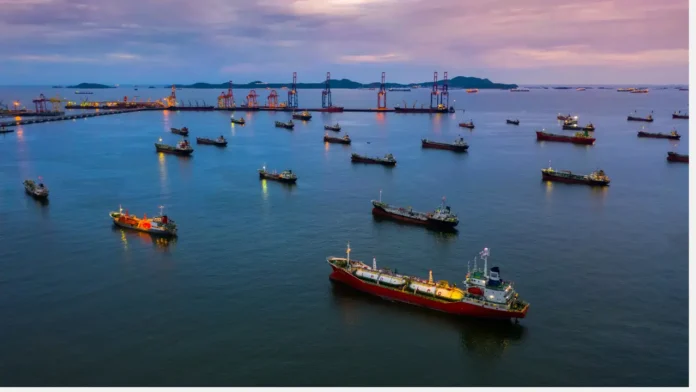
Tensions in West Asia have escalated once again after Iran issued a stern warning to commercial vessels and oil tankers navigating the strategically vital Strait of Hormuz. Tehran has instructed all ships to follow routes designated by Iranian authorities, cautioning that vessels ignoring the directive could face a “forceful response.”
The warning comes at a sensitive time, as diplomatic efforts continue to stabilize the region following months of conflict involving Iran, the United States, and Israel. Despite ongoing negotiations, the latest announcement signals that the Strait of Hormuz remains one of the world’s most volatile maritime flashpoints.
Iran Tightens Control Over the Strait
According to Iranian state media, the warning was issued by the Khatam al-Anbiya Central Headquarters, Iran’s joint military command. The statement declared that only routes approved by the Islamic Republic of Iran would be considered legitimate for vessels passing through the Strait of Hormuz.
Iran also warned that any ship attempting to use unauthorized routes would be treated as violating its security directives and could face military action. The move reflects Tehran’s continued efforts to assert greater control over one of the world’s busiest energy corridors.
Why the Strait of Hormuz Matters
The Strait of Hormuz is widely regarded as one of the most important maritime chokepoints in the world.
Connecting the Persian Gulf with the Gulf of Oman and the Arabian Sea, the narrow waterway serves as the primary export route for crude oil and liquefied natural gas (LNG) from Gulf nations, including Saudi Arabia, Iraq, Kuwait, the United Arab Emirates, Qatar, and Iran.
Nearly one-fifth of the world’s oil consumption passes through this strategic corridor, making any disruption a matter of global economic concern. Even temporary uncertainty can affect fuel prices, shipping schedules, and international trade.
Diplomatic Talks Continue Despite Warning
Iran’s latest directive comes even as indirect talks between Tehran and Washington continue through regional mediators. Reports suggest both sides are attempting to preserve a fragile understanding that has allowed limited shipping activity to resume after months of disruptions.
However, disagreements remain over who should control navigation through the Strait of Hormuz. Iran has reportedly sought greater authority over shipping lanes and has floated proposals related to transit regulation, while the United States and its allies continue to support unrestricted freedom of navigation under international maritime norms.
Global Oil Markets Remain Cautious
Energy markets have reacted cautiously to the latest developments. While crude oil prices have remained relatively stable due to ongoing diplomatic efforts and increased production from Gulf exporters, analysts warn that any fresh confrontation in the Strait of Hormuz could quickly reverse that trend.
Shipping companies also continue to face elevated insurance costs and operational risks despite the gradual recovery in tanker traffic following the recent ceasefire.
What It Means for India
India imports a significant portion of its crude oil from West Asian countries, making uninterrupted shipping through the Strait of Hormuz essential for the country’s energy security.
Any prolonged disruption could increase freight costs, push up global crude prices, and ultimately impact fuel prices, inflation, and industrial production in India. Policymakers and energy companies are therefore closely monitoring developments in the region.
The Road Ahead
Although diplomatic negotiations continue, Iran’s latest warning highlights the fragile security situation in the Gulf. The Strait of Hormuz remains a critical artery for global energy supplies, and any escalation could have far-reaching consequences for international trade, shipping, and oil markets.
For now, commercial shipping continues under heightened vigilance, but the latest developments underscore that geopolitical tensions in West Asia remain far from resolved.

