


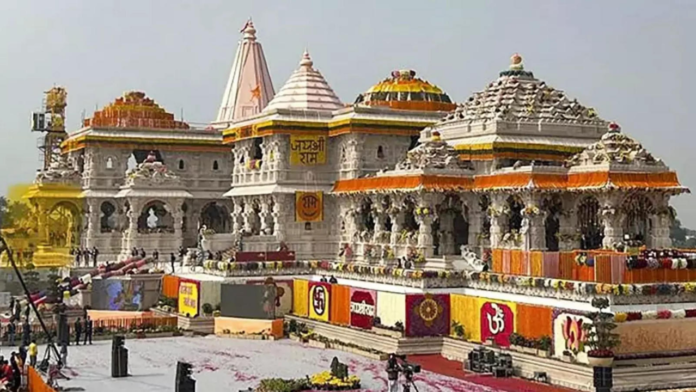
The Faizabad Bar Association passed a resolution threatening a ₹5 lakh penalty on any member who defends the accused. The Constitution, the Bar Council of India’s own rules, and decades of Supreme Court precedent all say that resolution is illegal — and that the rule of law cannot afford to bend, even when faith is involved.
When videos of the Ayodhya Bar Association’s general body meeting went viral on June 29, the images were striking: lawyers in black robes, gathered in the premises of the Faizabad District Court, demanding not just that the accused in the Ram temple donation theft case be punished — but that no colleague of theirs be permitted to defend them. Any lawyer who broke ranks, the resolution warned, would face a penalty of ₹5 lakh per accused.
The sentiment behind the resolution is understandable. The alleged theft of crores in donations from one of the most sacred temples in India has genuinely hurt millions of devotees. The lawyers in that meeting were expressing moral outrage that much of the country shares. But outrage, however righteous, cannot override the Constitution. And this resolution, legal experts are now pointing out, does precisely that.
Resolution Passed
June 29, 2026 — Faizabad Bar Association
Penalty Threatened
₹5 Lakh per accused on any dissenting lawyer
Additional Demand
Champat Rai, Anil Mishra & Gopal Rao to “leave Ayodhya in 3 days”
SC Position
All such resolutions declared null and void
What the Bar Association Did
In a general body meeting on June 29, the Ayodhya Bar Association warned that any member who takes up the case for the accused will face a fine of ₹5 lakh. The lawyers also demanded that Champat Rai, Anil Mishra, and Gopal Rao — figures linked to the controversy — leave Ayodhya within three days, threatening to blockade the city if they did not comply.
Bar Association secretary Shailendra Jaiswal said: “The theft of temple offerings has deeply hurt our sentiments. All lawyers in Faizabad have agreed not to defend the arrested accused.” The association’s president, Kalika Prasad Mishra, made the announcement to the media outside the district court — a video that quickly circulated on social media.
This move echoes a 2005 decision by the same bar body when it refused to represent those accused in the Ram Mandir terrorist attack case — a troubling precedent that suggests the association has a habit of making exceptions to the rule of law when its members feel strongly enough about a case.
What the Constitution Says
India’s Constitution is unambiguous on the question of legal representation. Article 22(1) guarantees the right to consult and be defended by a chosen lawyer, while Article 39-A goes further, requiring state-sponsored legal aid for those who cannot afford it.
More broadly, Article 21 talks about a fair trial to every person. Article 14 of the Constitution of India states that the State shall not deny to any person equality before the law or the equal protection of the laws within the territory of India. The Supreme Court has interpreted Article 21’s guarantee of life and personal liberty as encompassing the right to a fair trial — and a fair trial is impossible without legal representation.
As one legal article on the matter put it bluntly: by refusing to defend a person, a lawyer is effectively pronouncing them guilty before the trial has even begun. That is not justice. That is a mob verdict wearing a gown.
“As a lawyer who has represented Ajmal Kasab and the Nirbhaya killers, I am distressed by the resolution of the Ayodhya Bar Association. It goes against the constitutional right of an accused to be represented by a lawyer of his choice. Dear colleagues, God expects you to do your duty. If you can’t, shed your robes and join the mob.”— Senior Advocate Raju Ramachandran
What the Bar Council of India’s Rules Say
The Advocates Act, 1961, and the professional conduct rules framed by the Bar Council of India govern every lawyer practising in this country. Those rules are direct on this point.
Bar Council of India — Professional Conduct Rules
- Duty to accept briefs: An advocate is bound to accept any brief in the courts or tribunals at a fee consistent with their standing at the Bar and the nature of the case. They can only refuse under specific, personal circumstances.
- Bound to offer services: Every advocate, on being approached by a litigant, is bound to offer their services unless they have a justifiable reason to refuse.
- Collective resolutions cannot override individual duty: Bar associations may express opinions or pass resolutions, but they cannot legally prohibit advocates from appearing for an accused person. Such resolutions do not have the force of law and cannot override an accused person’s constitutional rights.
The Faizabad Bar Association’s resolution is patently illegal, given its ignorance of a long line of judicial precedents on an accused’s rights and a lawyer’s duties. The imposition of a ₹5 lakh monetary penalty on any lawyer who chooses to fulfil their professional duty is not just an ethical violation — it is an attempt to coerce members of a profession whose independence is constitutionally protected.
What the Supreme Court Has Consistently Held
This is not a new question in Indian courts. Bar association boycotts of accused persons have come up repeatedly — after the 2008 Mumbai terror attacks, the Nirbhaya case, the Ryan International School murder case, anti-CAA protest cases — and each time, the Supreme Court has come down firmly on the same side.
Supreme Court — Key Precedents
- 2010 Division Bench (Justices Markandeya Katju & Gyan Sudha Mishra): The Supreme Court ruled that lawyers or their associations cannot refuse to appear for accused whether they were terrorists, rapists, murderers or any others, as such refusal would be a violation of the Constitution and Bar Council norms. “Professional ethics requires that a lawyer cannot refuse a brief, provided a client is willing to pay his fee, and the lawyer is not otherwise engaged.” The bench declared all such resolutions of Bar Associations in India null and void.
- Ryan International School case: The Supreme Court put an end to the growing trend of advocates’ associations passing resolutions not to allow lawyers to defend persons accused of heinous and child sexual abuse offences, by terming such resolutions illegal.
- Karnataka High Court (Justice Abhay Oka, 2021): Then-Chief Justice Abhay Oka pulled up the Hubbali and Mysuru Bar Associations for passing resolutions to deny legal representation to persons accused of flashing provocative posters during anti-CAA protests, observing that State Bar Councils should take swift action against such Bar Associations.
- On Amicus Curiae: A three-judge bench observed that if the advocate representing the accused was not available for one reason or another, it was open to the Court to appoint an Amicus Curiae — but the cause in any case ought not to be allowed to go unrepresented.
The Kasab Parallel — And What It Tells Us
The closest historical parallel to what Ayodhya is witnessing today came in the aftermath of the 2008 Mumbai terror attacks. After the attacks, every lawyer declined to represent Mohammad Ajmal Amir Kasab, the lone militant arrested. A legal aid lawyer was appointed but also declined. Another lawyer who agreed to defend Kasab started receiving threats. Subsequently, another lawyer was appointed and was given police security.
The late Ram Jethmalani — perhaps India’s most celebrated defence lawyer — was direct in his response. He stated that no lawyer has the right to say he will not defend an accused. “There is the express rule of the Bar Council of India that no lawyer shall refuse to defend a person.”
Senior Advocate Raju Ramachandran, who appeared for Kasab himself, put the principle in stark terms when commenting on the Ayodhya situation: defending an accused does not mean endorsing their alleged crime. It means upholding the system that determines guilt or innocence in the first place.
“Even the worst criminal, accused of the most heinous crime, is entitled to a fair hearing. That is what establishes the credibility of the judicial process.”— Former CJI Justice J.S. Verma
The Distinction the Bar Association Is Ignoring
There is an important legal distinction at the heart of this controversy — one the Bar Association appears to have collapsed entirely.
If a lawyer does not find their conscience permitting them to defend a case, they can certainly refuse — but it would be entirely improper for that same lawyer to compel or cajole other lawyers not to defend a particular accused just because the accused is charged with a heinous offence.
In other words: personal moral discretion is permitted. Organised institutional coercion is not. A lawyer who genuinely cannot in good conscience take up this case can decline the brief before engagement. What a bar body cannot do is transform that individual choice into a collective prohibition backed by financial penalties — that converts a matter of conscience into a mechanism of suppression.
The Accused’s Rights — At A Glance
- Article 21 — Right to life and personal liberty, interpreted by courts to include the right to a fair trial
- Article 22(1) — Right to consult and be defended by a lawyer of one’s own choice
- Article 39-A — Directive requiring the state to provide free legal aid to those who cannot afford it
- Article 14 — Equality before the law and equal protection of the laws for every person
- Advocates Act, 1961 — Governs professional conduct; BCI Rules require advocates to accept briefs unless specifically and personally engaged elsewhere
- Amicus Curiae — Courts retain the power to appoint independent counsel if no lawyer agrees to represent an accused, ensuring no case proceeds unrepresented
What Should Happen Now
The Bar Council of India has the authority — and, legal experts argue, the responsibility — to intervene. The Supreme Court has in past instances observed that State Bar Councils should take swift action against Bar Associations which pass such resolutions. If the Uttar Pradesh Bar Council does not act, the matter is likely to come before the courts either through a suo motu case or a petition by one of the accused.
There is also the practical problem. If no Ayodhya lawyer agrees to represent the eight arrested men, the trial court will be compelled to appoint an Amicus Curiae. That appointment will carry its own complications — and will almost certainly invite judicial scrutiny of the Bar Association’s resolution itself.
The Ram Mandir donation theft is a genuine scandal that demands accountability. The accused, if guilty, should face the full force of the law. But the way to deliver that outcome is through a fair, contested trial — not through a system where one side is denied a voice before the proceedings begin. The Constitution does not make exceptions for cases that hurt religious sentiments. And the lawyers of Ayodhya, of all people, should know that.

